

A Coach Broke in Two—The Real Crack Is in Rail Bhavan
“The system knew exactly what to inspect—It did not inspect it”
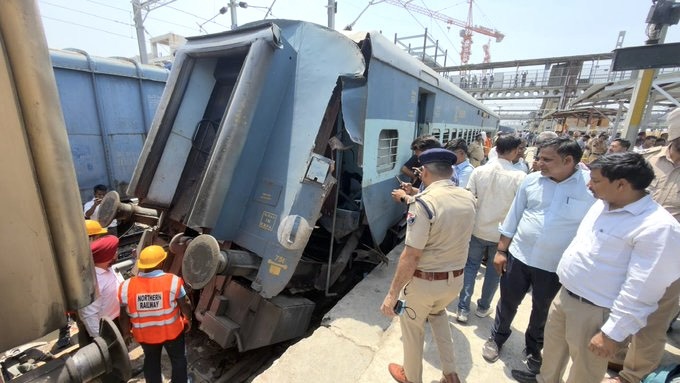
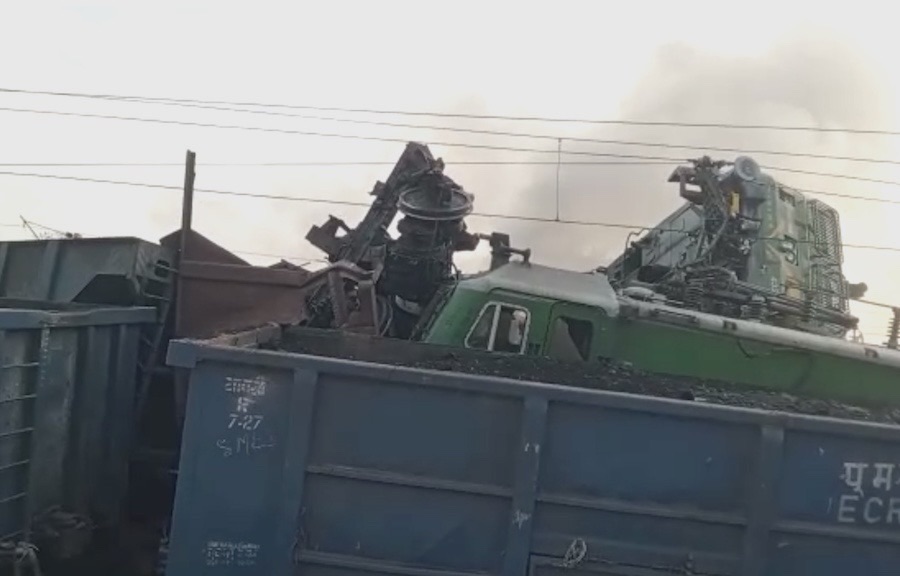
On 6 June, at Ludhiana, a coach split in two. The train was leaving for Katra. It had barely begun to move. The body gave way near the lavatory. Behind it stood three more coaches and close to 500 passengers. One thing saved them. The train was still at the platform: “Ludhiana Railway Station Vaishno Devi from Delhi Train Coach Break”
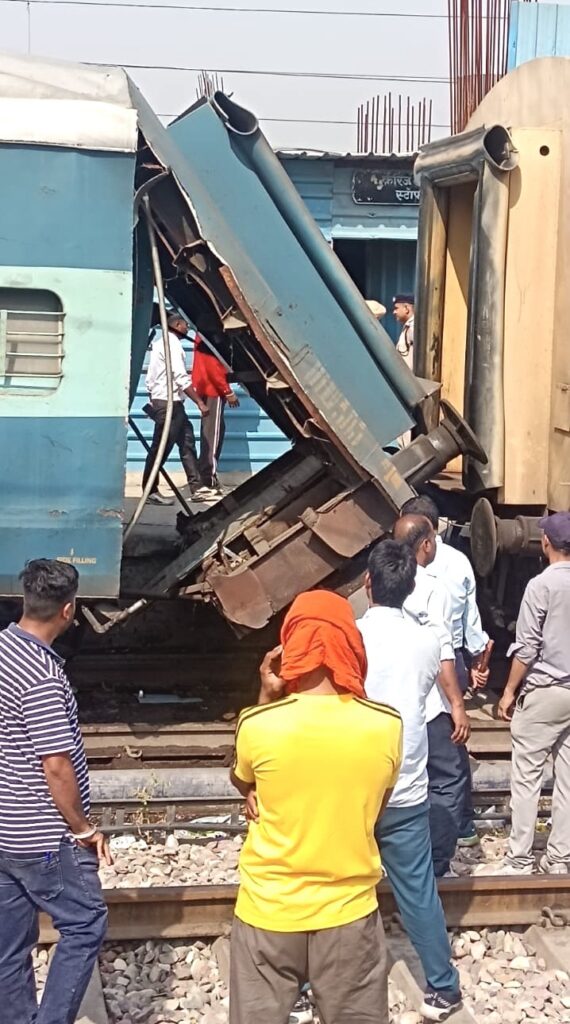
Now move that break to open track. To a bridge. To a ghat. The word for that is not “accident.” It is a body count waiting for a date.
The design is not the culprit
First, clear the design. These are ICF coaches. India has built and run this family since the 1960s. The underframe is made to take the pull and push of a locomotive, even in rough shunting on a steep grade. A design that has carried the nation for over sixty years did not suddenly fail at a standing start. Acquit the drawing board.
The Board’s own letter names the rot
Now read the Railway Board’s letter. It names the cause without flinching. Heavy corrosion in the trough floor, the sole bar, the lavatory area. The coach was more than twenty years old. It was last given a Periodical Overhaul at Harnaut in October 2024. Then comes the admission: the laid-down checks of the headstock, sole bar, doorways and lavatories were not followed.
Read that twice. “The system knew exactly what to inspect. It did not inspect it.”
A maintenance machine stretched past its limit
So this is not bad luck. This is maintenance. And maintenance asks the questions that never reach a review slide. Did the depot have enough pits to examine the underframe from below? Did the staff have the tools, the lights, the jacks? Did they have the hours? Did they have the hands? You cannot inspect a underframe-you cannot reach. You cannot tap-test rust you were never given the time to find.
Here is the part that stays out of every official note. Rolling stock is arriving faster than depots can absorb it. Coaches, wagons, locomotives, Vande Bharats, inducted well beyond the holding capacity of the sheds meant to look after them. Rakes stand wherever a spare line can be found. A depot built for one number cannot maintain twice that number with the same pits and the same men. Something has to give. This time it was a headstock.
Another “drive” is not a system
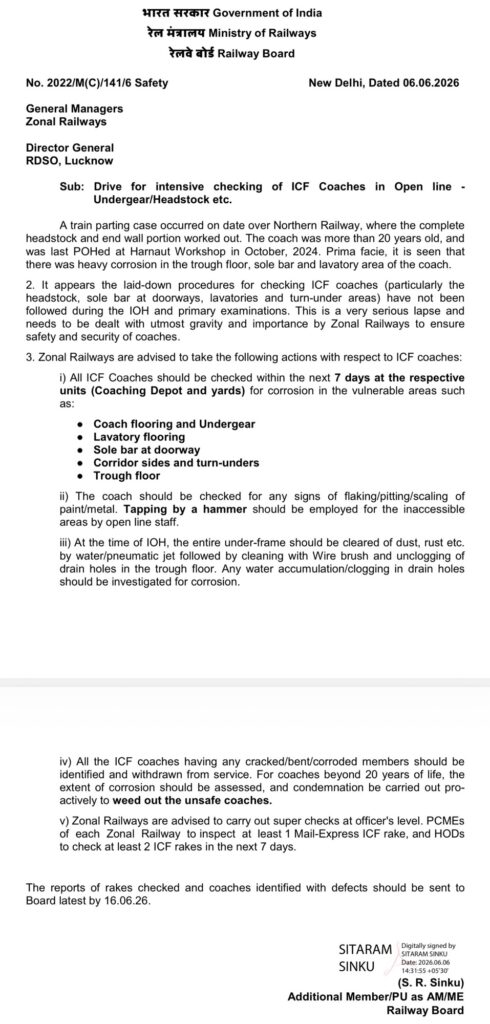
And the response? Another “drive.” Check every ICF coach in seven days. Run super-checks at officer level. Send a report to the Board by 16 June. We have watched this reflex many times. A drive is an apology in a hurry. It is not a system. When the routine works, nobody needs a drive.
It is not one coach. It is a pattern.
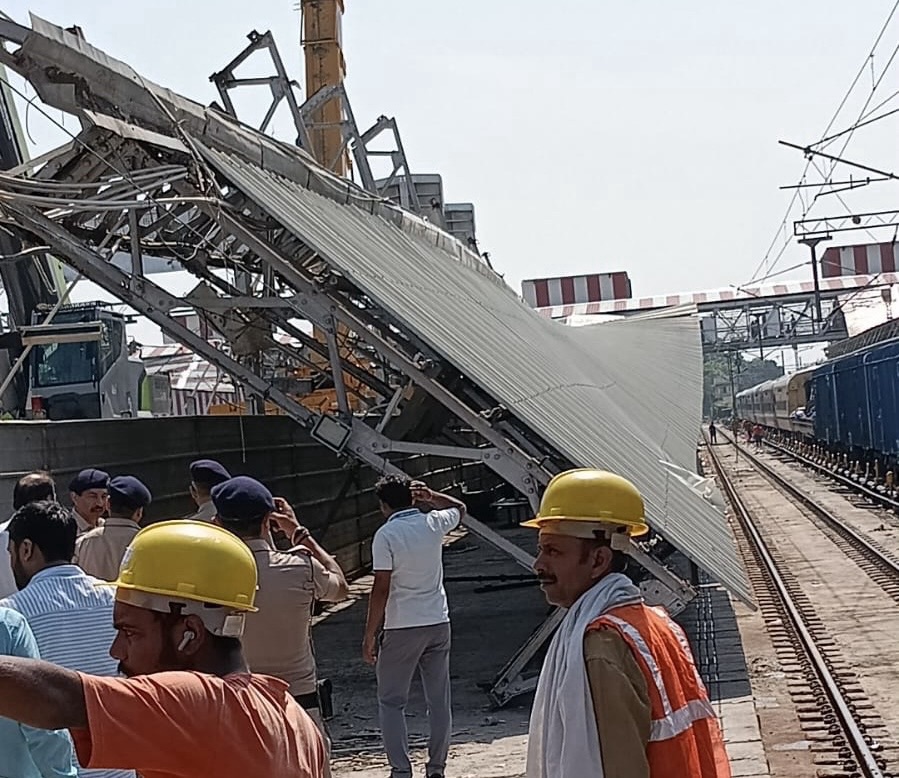
This coach does not stand alone. Look at a single fortnight. A platform roof came down at Lucknow’s Charbagh. A girder fell on a bridge under construction at Adas in Gujarat. Two engineers were buried alive at Kota during night excavation. An Ujjain Express rake jumped the rails at Rishikesh, with brake failure suspected. A power car of the Mahanagari Express seized a brake liner and smoked at Kasara, in the ghat. [report: “A Fortnight of Failures, and a Board Too Busy to Read Them”] false ceiling broke in Solapur. One organisation. Many cracks. The same truth.
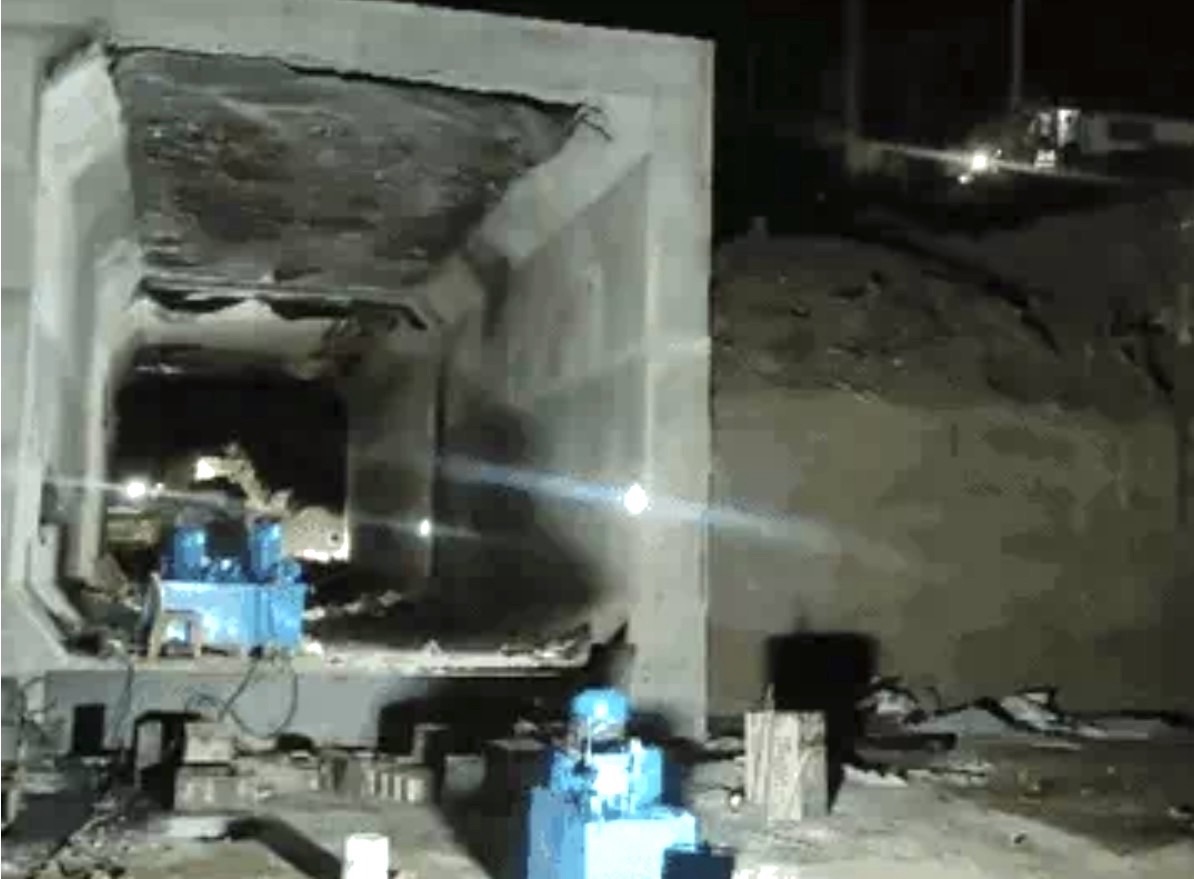
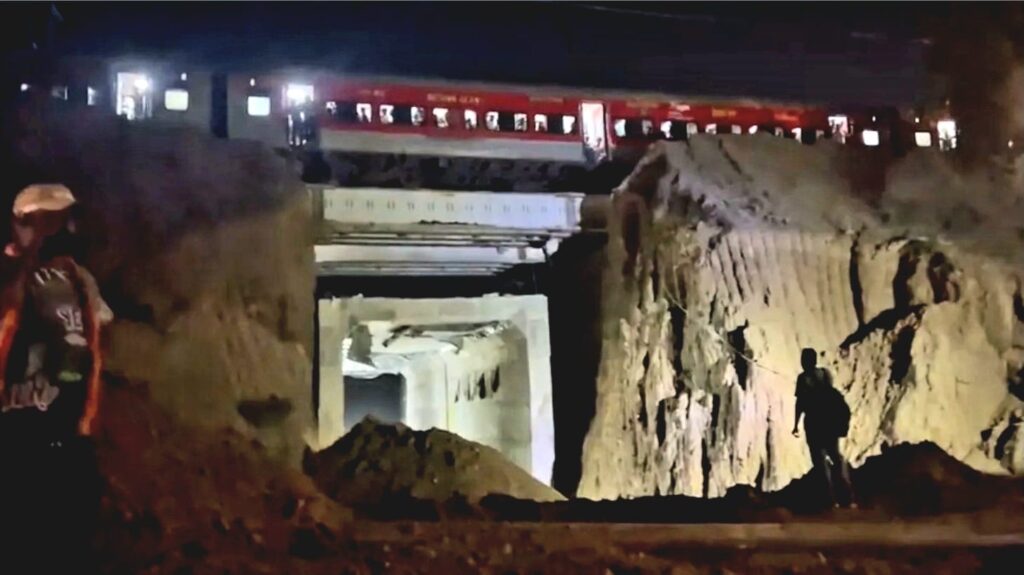
And RDSO, the body meant to turn a run of failures into a design fix, sits outside the frame.
The brakes warned us years ago
The brakes told this story long before this coach did. In August 2022, RDSO itself wrote to the zones that the Knorr-Bremse Bogie Mounted Brake System carried a “known deficiency.” That system sits on roughly one lakh wagons. Goods-train speeds were cut, then cut again, because the braking could not be trusted. [report: “बीएमबीएस में ‘जानी-पहचानी विसंगति’ थी, तो यह सिस्टम बीस सालों से लगातार जारी क्यों रहा?”]
Then read the casualty list. In September 2022, a cement-loaded goods train in Solapur lost its brake power, ran away down the section, and was stopped only by the sand hump after its loco and wagons left the rails. [report: “Cement load derailed between SUR-DD section in Solapur Division, Central Railway”] In November 2022, a derailed goods train climbed onto the platform at Korei in Odisha and killed three people standing there. [report: “Kalyug – Now Train Climbs Platform and Kills”] In April 2023, near Singhpur in Madhya Pradesh, a goods train overshot the signal at 67 km per hour and rammed a standing train from behind. A loco pilot died. He had been on duty for about fourteen hours, and most of the wagons carried the same suspect brake system. [report: “In the #KMG controlled Rail-system, Rear End Collision-Train Brakes Yet Again?”]
A known deficiency. One lakh wagons. Years of warnings. The warnings were filed, not fixed.
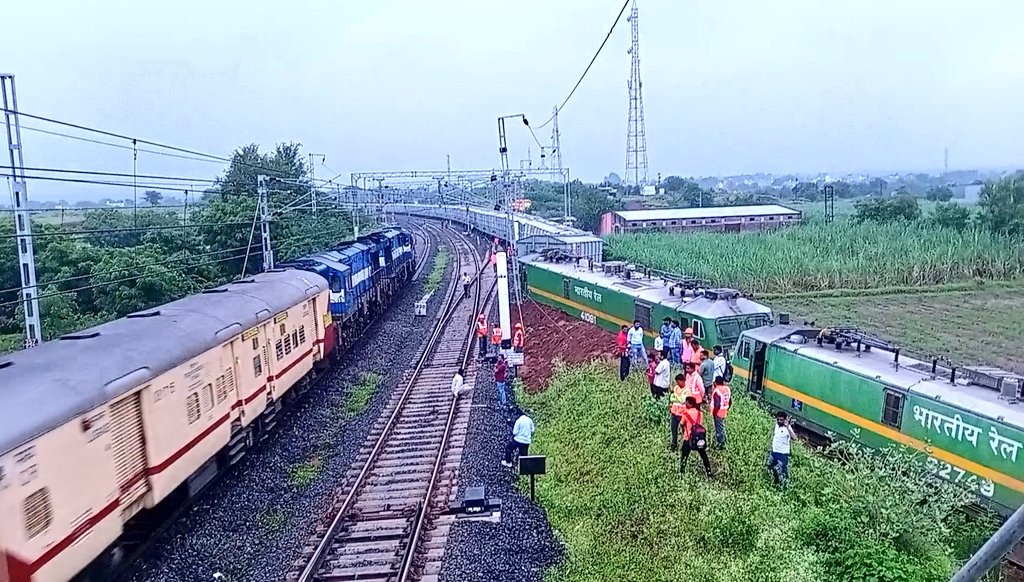
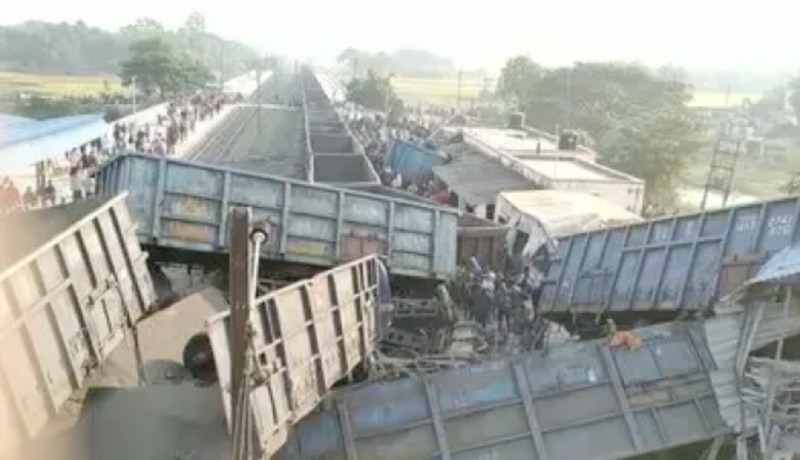
Where the rot begins
So why does the routine keep breaking? Go to the file. Office Order 58 of 2016 churned the cadres and split the asset from the engineer who understands it. [Part-I: “Office Order 58 of 2016 has finally caught up with Indian Railways”] [Part-II: “Office Order 58 of 2016 Has Finally Caught Up With Indian Railways — Part-II: The First Shot, Nine Years On”] The Member meant to direct the work no longer controls the man who does it. Around the same logic, brakes and couplers settled into a tight, two-company grip, and RDSO was reduced to a stamp the Board could turn. Asset by asset, the in-house authority to say “no” was signed away.
Add the bill. A Supreme Court case lost on 8 May, with traction energy cost set to climb by more than 30 per cent. Vande Bharat depots that cost north of ₹500 crore. Locomotives that each carry close to a dozen annual maintenance contracts. More than one lakh crore of rolling stock bought, even as the in-house skill to test it, price it and reject it was allowed to thin out.
The top, meanwhile, looks elsewhere. Glossy posters. WhatsApp groups. Failure analysis tweeted, not studied. [report: “दो रेल इंजीनियरों की दुर्भाग्यपूर्ण मौत: वास्तविक तकनीकी सुधारों और जवाबदेही की तुलना में प्रस्तुतियों एवं छवि प्रबंधन पर अधिक जोर”] [report: “सोशल मीडिया के जाल में उलझा शीर्ष रेल प्रबंधन: सिस्टम की रीढ़ टूटी, भय के वातावरण में काम कर रहे अधिकारी और कर्मचारी”] Empire dressed up as transformation.
The fix is not glamorous
The cure is dull, and that is the point. Restore the system that existed before the churn. Match the asset to the engineer to the controlling officer. Undo Office Order 58. Free RDSO to test and to reject, and loosen the vendor grip on brakes and couplers. Put failure analysis back with RDSO and the field supervisor, not the camera. Give the depots the pits, the tools, the time and the staff before you hand them one more rake.
Until then, the next coach is already rusting. Quietly. Near a lavatory. Waiting for a platform to be kind.