

A Fortnight of Failures, and a Board Too Busy to Read Them
The dots are all there—Nobody in Rail Bhavan is paid to join them
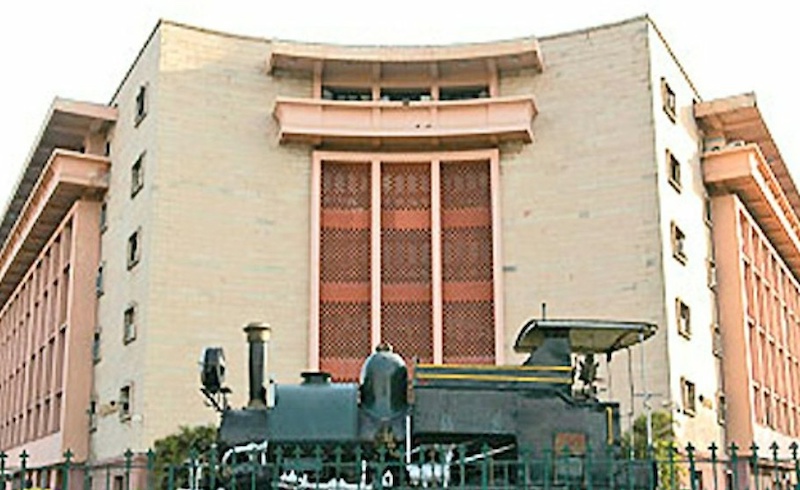
Begin with the roof—and with the man who once ran the division where it fell. This week, on Platform 5 of Lucknow’s Charbagh Railway Station—one of Northern Railway’s busiest hubs and a division the present Chairman of the Railway Board himself once headed as DRM—a platform shelter under construction by the Railway Land Development Authority (#RLDA) came down in a heap of tin and twisted steel. A traveling ticket examiner (#TTE) on duty, Bhupendra, was pulled out with a fractured leg. Two passengers, Abhishek and Sahil, were dug from the debris.
The detail that should have frozen #RailBhavan is this: the Howrah–Dehradun Express was approaching the same platform as the structure collapsed and was halted just in time. The margin between embarrassing videos and a mass-casualty headline was a few seconds of alertness. This is a redevelopment site—the very Station Development work the Board has made its obsession—collapsing onto the passengers it was meant to dignify.
Today, the list grew again. In Adas village of Anand district, Gujarat, a girder being positioned on a railway road over-bridge under construction dropped between its two pillars and crashed. It killed no one for the sole reason that the site happened to be empty when it failed. This is a Railways structure, executed through the zone’s Gati Shakti unit—the wing created to drive infrastructure projects at high speed. Residents and local politicians have blamed substandard work by the contracting agency and safety warnings they say went unanswered; the railway administration and police have opened the now-routine inquiry. By the region’s own count, it is yet another addition to a run of bridge failures.
Read it next to Kota. On the night of May 28, at 20:10, on the Nagda–Kota section between Kanwalpura and Dara, a box was being pushed under the track to build a road underbridge (#RUB) at Bridge 148, deep in the Dara valley. The earth gave way. Two railwaymen supervising the work—Senior Section Engineer (#SSE) Sanjay Jha and a trainee Junior Engineer, Prabhat—were buried where they stood. JCBs reached them, but the men did not survive. No train derailed; no passenger was hurt. The railway simply lost two of its own engineers to a night excavation that, on early evidence, lacked the critical shoring such work demands.
Three construction sites in a single week—a platform roof, a bridge girder, a box pushed under a live track—and the official reflex is identical each time: rush a crane, dispatch the #DRM to the spot, order an inquiry, and await the report. Activity after the event is not the question. The negligence before it is.
The same fortnight completed the pattern. A week earlier, in the Rishikesh yard of the Moradabad division, three coaches of an empty #UjjainExpress rake (Train 14317) jumped the rails during a shunting movement and were severely damaged, with brake failure suspected to be the cause. At #Kasara on #CentralRailway, the generator van (power car) of the Mumbai-bound #MahanagariExpress began emitting smoke at Platform 2 on Thursday morning. Staff traced it to a brake liner that had overheated and seized, cleared it within fifteen minutes, and sent the train on its way. No one was hurt in either case—which is precisely why neither will change anything. A system that misreads every near-miss as a clean save, rather than a warning it was lucky to survive, learns nothing between disasters.
The barrage that buried the priority
The week was far from quiet at the top. The Board issued drive after drive and instruction after instruction on monsoon preparedness—a flurry that produced motion without protection. At the root of this is an incentive structure that rewards the wrong instinct: “visibility over verification, the polished slide over the inspected site, and the WhatsApp acknowledgment over work actually done.”
Station Development sits at the centre of this ecosystem. By near-universal admission within the system, it absorbs a disproportionate share of a division’s attention for a thin return, and the pressure to feed it is relentless. There are multiple Google Sheets and competing software stacks dedicated to Station Development alone. When a call or message singles out a division, the #DRM passes it down, and the pressure lands unfiltered on branch officers who are already short on hours. The result is a generation of Divisional Railway Managers who are working hard but working indoors. When spreadsheets and presentation formats rule the day, the field gets whatever attention is left. Lucknow and Kota are what is left.
This is the same disease diagnosed earlier this month in the Western Railway’s own publicity—a zone celebrating the commissioning of a Dadar electronic interlocking as a “modernization milestone” while the network it serves runs on crush loads and sheer luck. This self-publicity is growing exponentially across every division and zonal headquarters. The applause is manufactured for an audience of seniors. The “Bade Sahab” culture survives because the officer who reports the success never meets the passenger who pays for the failure.
Why the dots stay unconnected
The dots remain unconnected because the man who should be joining them is looking elsewhere. The Chairman’s energy, by the evidence of his own output, goes into post-facto failure analysis, long messages, and opinions on everything—while the institution he runs lost a critical case in the Supreme Court on May 8 that strikes at how it funds itself.
That loss was no mere technicality. A two-judge Supreme Court bench held that #IndianRailways is a consumer of electricity, not a deemed distribution licensee (2026 INSC 464), exposing it to cross-subsidy surcharges on a decade of open-access power. The traction-energy bill is now expected to climb by more than 30% on the Railways’ own internal estimates—adding several thousand crores to the annual run-rate before any retrospective settlement, against an operating ratio already pressed near 100%. A constitutional protection written precisely for this dispute was on the record but was never argued. That is not bad luck. That is a brief no senior strategist owned.
Failure analysis, meanwhile, remains confined to divisional and headquarters levels. #RDSO—the body that exists to turn a pattern of failures into a systemic design correction—is completely out of the frame. A Rajdhani burning near Ratlam on May 17, with an AC-3 coach and the adjoining luggage-cum-guard van gutted and sixty-eight passengers evacuated alive; a redevelopment roof down at Lucknow; a girder down on a bridge under construction at Adas; two engineers dead at Kota; three coaches off the rails at Rishikesh; and continuous OHE breakdowns — these are not separate accidents. They are a single organization, fracturing at several points, telling the same truth. Until that truth is read in Rail Bhavan rather than tweeted from it, next fortnight’s bulletin will look exactly like this one.
Is the Railway Ministry finally paying the price for mindless extensions and a demoralized cadre of officers?