

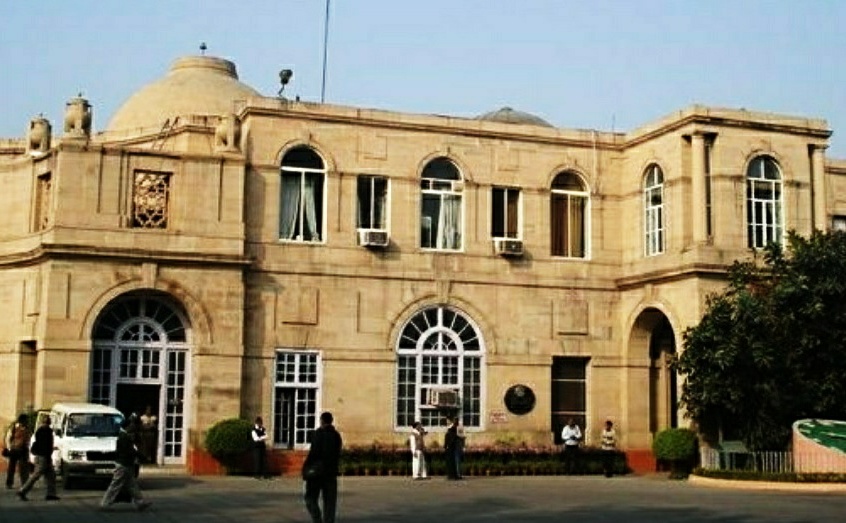
Systemic Violations in Manpower Management and Corrupt Practices: A Case Study of Firozpur Division
FIROZPUR: A deep-rooted administrative crisis has emerged within the Firozpur Division of Northern Railway, shedding light on a problematic practice across Indian Railways where technical field staff are quietly moved into administrative divisional offices for prolonged periods. While local authorities frequently justify these ad-hoc movements by citing a shortage of ministerial clerical staff, the practice effectively starves essential field units of manpower, compromises railway safety, and creates a breeding ground for institutional corruption and extortion.
The administrative cost of this manipulation has been laid bare by a recent criminal case registered by the Central Bureau of Investigation (#CBI) against two technical employees who were found operating out of the Firozpur Divisional Railway Manager (#DRM) office instead of their designated field posts. As per sources, both the employees are the office bearers of a recognised union.
The gravity of this structural compromise was brought to light when the CBI Anti-Corruption Branch in Chandigarh registered a regular case following a verified trap and investigation. According to the investigation details — Vijay Kumar, a Technician-I, and Dharamvir, a Senior Section Engineer — both belonging to technical cadres but deployed inside the administrative wing of the Firozpur divisional office, demanded an illegal gratification of ₹60,000 from a complainant.
The bribe was allegedly demanded on behalf of Bijender, the Divisional Personnel Officer (#DPO), in exchange for securing a favorable settlement in ongoing disciplinary proceedings involving three charge-sheets issued to the complainant. When the complainant failed to pay the bribe, the DPO subsequently imposed an official penalty, after which the accused technical staff reiterated their monetary demand by promising they could suitably manage the penalty at the appellate stage, while warning of severe consequences if the amount was not paid.
The CBI has since booked the officials under Section 61(2) of the Bharatiya Nyaya Sanhita, 2023, along with Sections 7 and 7A of the Prevention of Corruption Act, handing the case over to Inspector Narender Kalwaniya for a thorough probe.
This bribery scandal directly exposes a critical operational question regarding why highly qualified technical field personnel, such as a Senior Section Engineer and a Technician, are permitted to work for years within administrative personnel wings when their sanctioned posts, payroll, and primary duties belong entirely to Open Line field operations. When such employees remain detached from their original places of posting for extended periods, the legal and administrative justification for their office deployment completely collapses.
This unauthorized shifting of manpower creates a dangerous dual vulnerability for the railway network, as frontline Open Line units face severe technical shortages that directly hinder essential day-to-day asset maintenance and track safety, while the central divisional offices become overcrowded with misplaced field staff operating entirely outside their proper cadres.
Across almost all divisions of Indian Railways, statutory establishment regulations and strict cadre rules are being systematically sidelined by local administrations. The narrative of an office staff shortage is often utilized as a convenient smokescreen to bring favored field employees into comfortable desk jobs, a practice frequently driven by mutual convenience, favoritism, or illicit trades for cash and other favours.
By constantly manipulating these informal attachments, local railway divisions bypass the Railway Board’s strict directives regarding tenure limits, vacancy management, and the segregation of technical and clerical staff. This removal of technical hands from their actual duty stations severely dilutes frontline supervision, as the very personnel responsible for track, signaling, and rolling stock safety are reduced to managing clerical paperwork, which ultimately erodes institutional accountability and allows middleman extortion to thrive.
To restore integrity and operational safety, the Railway Board must now step in to enforce absolute compliance with establishment rules through immediate, independent administrative reforms. This requires a comprehensive, transparent manpower audit across all divisions to cross-verify the physical location of every employee against their actual sanctioned posts and payroll locations, followed by the immediate repatriation of all ad-hoc technical staff back to their original field units.
Furthermore, the Vigilance Directorate must conduct unannounced surprise inspections to dismantle these informal attachments, while the Human Resource Management System (#HRMS) should be digitally linked with geo-fenced attendance tracking to ensure an employee’s physical workplace matches their cadre allocation. The Firozpur incident serves as a clear warning that structural irregularities directly feed financial corruption, and Indian Railways must urgently eliminate these unauthorized office deployments to protect public safety and institutional transparency.