

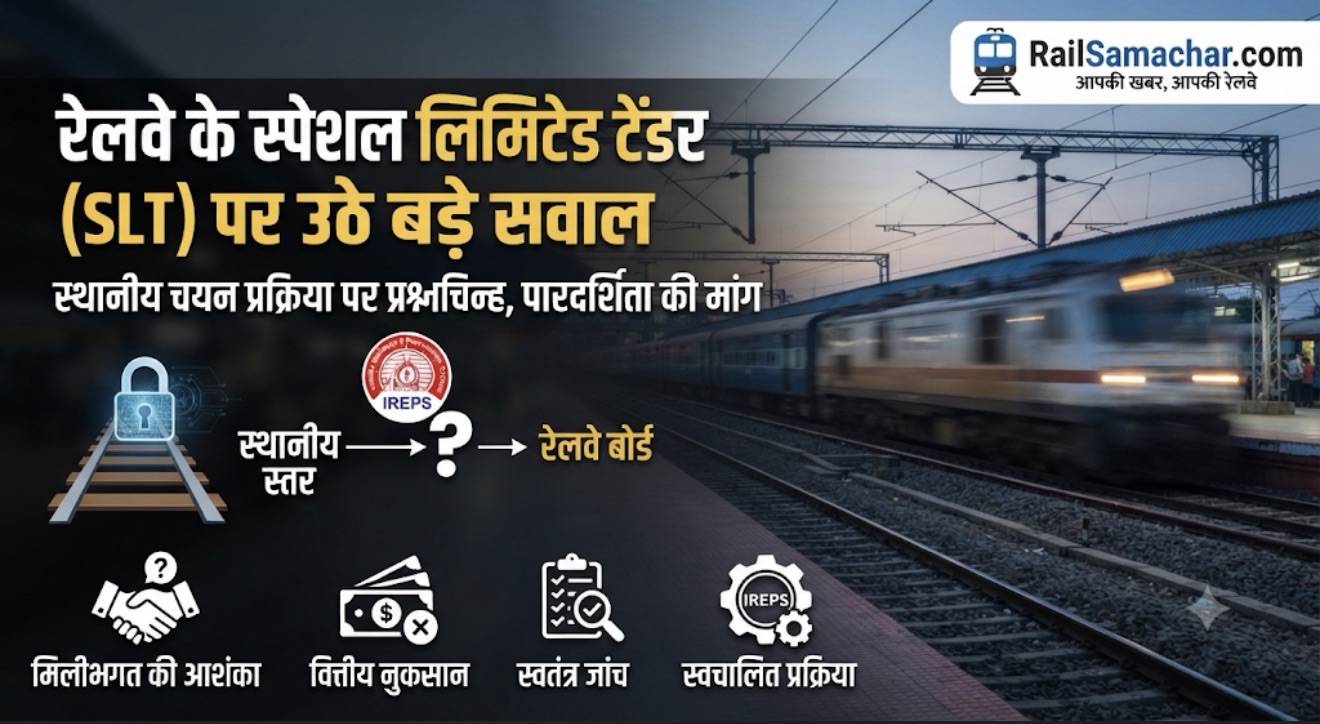
Major Questions Raised on Indian Railways’ SLT: How Transparent is the Local Contractor Selection Process?
The process of Special Limited Tenders (#SLT) used for construction and maintenance works in Indian Railways has once again come under severe scrutiny. Contractors and experts are demanding that the SLT tendering process be made fully automated, transparent, and operated at the Railway Board level via #IREPS (Indian Railways E-Procurement System). Furthermore, there is a growing demand for an independent investigation into the system of contractor selection at the local level.
Key Concerns and Major Points Raised:
- Lack of Transparency in the Selection Process: The biggest question is: who decides which contractors will be invited under SLT, and on what basis? Are local contractors working in the area being given opportunities repeatedly? The selection criteria, approvals, and the list of invited firms should be subject to full public accountability.
- Risk of Pool and Ring Formation: If contractors find out in advance who is participating in an SLT tender, the risk of mutual collusion, bid rotation, and weakened competition increases significantly. This could cost the Railways dearly, rather than securing work at genuinely competitive rates.
- Suspected Collusion Between Officials and Contractors: If there are complaints of improper coordination or conflicts of interest between railway officials and selected contractors in any case, an independent and fair investigation must be conducted. The inquiry should determine the basis of contractor selection and whether any specific party was unduly favored.
- Suspicion of Financial Irregularities and Money Laundering: If the investigation uncovers evidence of illegal payments, bribery, or suspicious financial transactions, relevant agencies should thoroughly probe the sources of funds and beneficiaries (though no one should be deemed guilty solely on suspicion).
- Examination of Digital Evidence and CDRs: Call Detail Records (CDRs), emails, messages, and other relevant digital evidence spanning at least 15 days—from the issuance of the tender until the bid submission period—should be examined with due legal authorization. The objective is to verify potential collusion, not to incriminate anyone based merely on contact.
- Financial and Legal Loss to the Railways: Compromised competition not only forces the Railways to bear higher costs but also exposes them to arbitration, litigation, and legal disputes later regarding contract fairness, selection processes, or payments.
Demands for Key Reforms:
- Automated System: An automated selection system should be implemented at the Railway Board level via IREPS to prevent local authorities from arbitrarily creating lists.
- Written and Auditable Criteria: Clear, transparent, and auditable rules must be laid down for selecting contractors in all SLT tenders.
- Confidentiality: The identity of participating contractors and details of their participation should be kept strictly confidential until bids are opened.
- Public Audit: An independent audit of SLT utilization, competent authority approvals, and final rates should be conducted and published on the respective zonal railway portals.
- Strict Action: In suspicious cases, investigations should be carried out by Railway Vigilance, CVC, or CBI, and strict action should be taken against culprits under the rules if corruption is proven.
Conclusion and Final Question:
When #IndianRailways already possesses an advanced digital system like IREPS, why shouldn’t the process of #contractor selection and invitation in SLT tenders be made completely transparent, fair, and auditable? The Railway Board must review this system immediately to safeguard public funds and ensure fair competition.