

Administrative Propriety and Railway Board Postings: Policy Inconsistencies and Serious Questions on Cadre Control
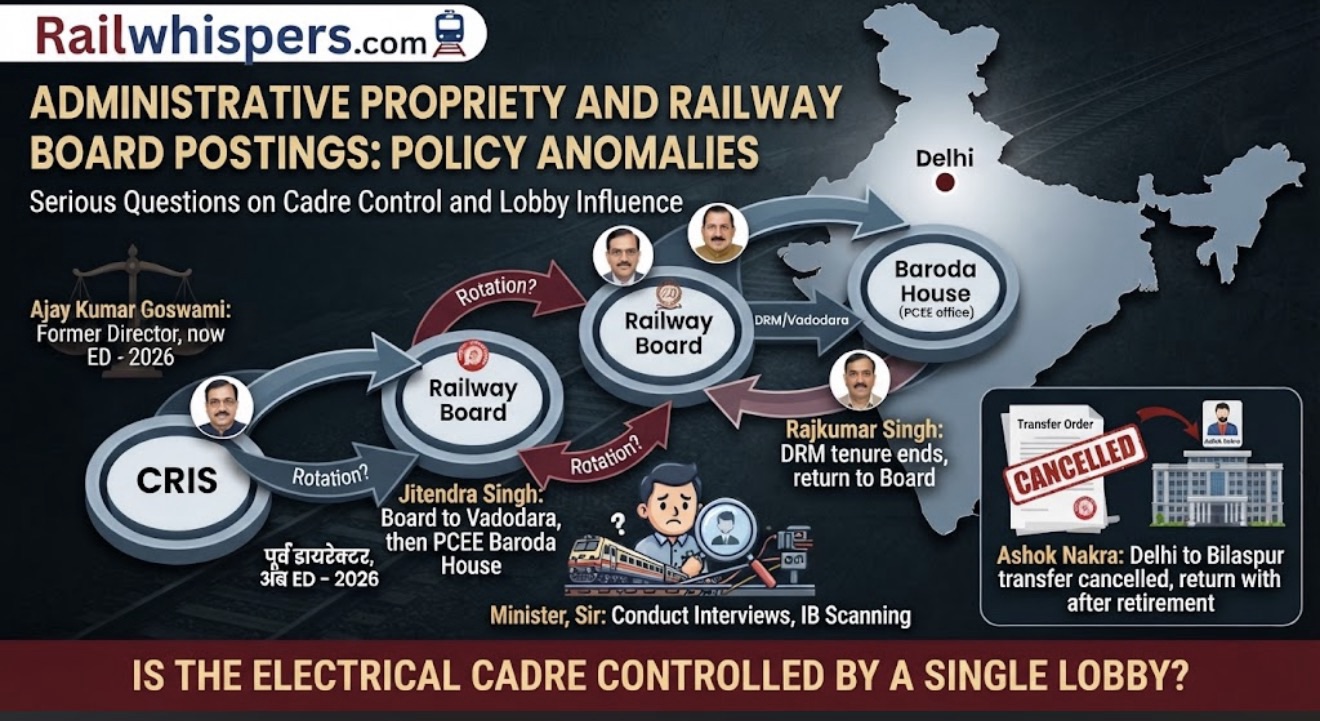
Some officers are considered above rules, morality, rectitude, and set standards. There is one electrical officer who is synonymous with the culture of “Yes Sir” and “Haan Ji Sir.” He completed his tenure as a Director in the Railway Board, went on deputation to CRIS in 2019, and returned to the Railway Board as an Executive Director (ED) in 2026. This gentleman is well-known as Ajay Kumar Goswami, who previously served as Director/Electric Loco in the Railway Board and has now been reassigned to his elevated post as an ED.
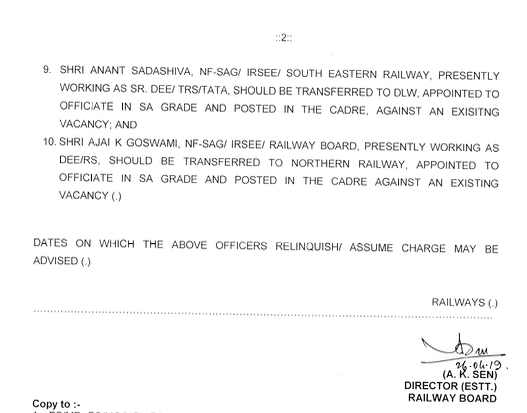
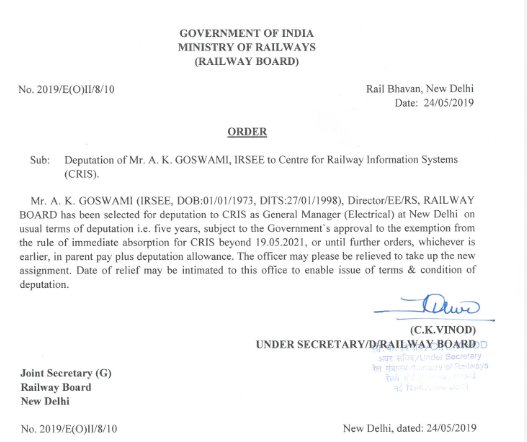
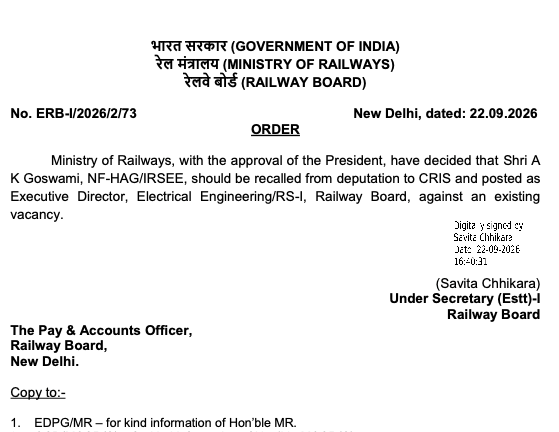
The city remains the same, and there are many such nests in Delhi! Now, what kind of rotation is this, Hon’ble Railway Minister?
Recently, only one electrical officer—Mr. Sundaresan—has come to the Railway Board from outside. Conversely, another officer, Rajkumar Singh, went from the Board to become a DRM, and after his DRM tenure ended in January, he loitered around Baroda House for a while before returning to the Board. The situation was similar for Jitendra Singh, who went from the Railway Board to Vadodara as a DRM, returned to the Board, and is now posted back at Baroda House as the Principal Chief Electrical Engineer (#PCEE). Pankaj Kumar Singh also went as a DRM from Baroda House, Delhi, and returned there—and will likely return to the Board from Baroda House soon.
Ashok Nakda was transferred from Delhi to Bilaspur by the then Chairman/Railway Board, Vinay Kumar Tripathi. Immediately after his retirement, as if mocking the system, those orders were cancelled, and Nakda was brought to the Railway Board from Badoda House along with his post. He had not implemented his transfer order for about six months. The posts that were brought back to the Board were originally removed from the Board’s purview by former Railway Minister Piyush Goyal himself. This means that to favour Nakda, the orders of both the Railway Minister and the Railway Board Chairman were overturned.
Is there a drought of competent officers in the Electrical Department of Indian Railways? Why is the entire electrical cadre controlled by a specific place and a specific lobby? Why are OSD/Electrical still handling sensitive work? The Director is right there, the Executive Director is right there, and promotions are happening right in the same place!
Hon’ble Minister, this is your own administrative team; call them, conduct interviews, and get them scanned through the Intelligence Bureau (IB). The fact that you today have to personally handle water testing, visit derailment sites, and inspect point machine wiring is the direct result of such favourable selections and postings. Such selections and postings demonstrate that the personal comforts and conveniences of officers are placed far above the interests of the railways and the citizens of the country.
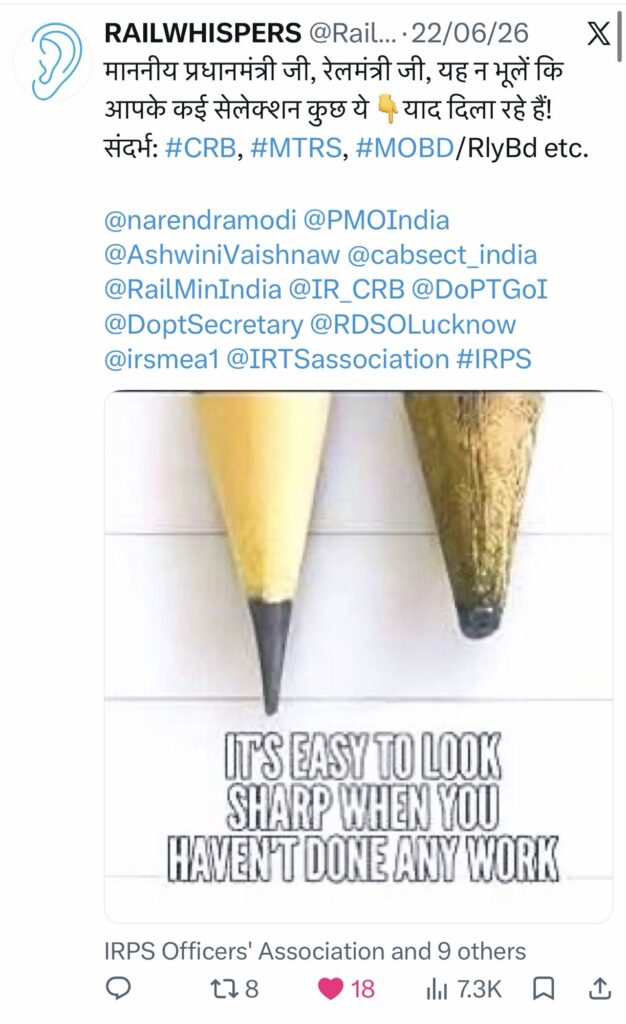
This serious question is also being raised: why are all these directives, transfer and posting orders being issued right now when Additional Member Traction (#AMTraction) and Member Traction & Rolling Stock (#MTRS) are both retiring in October and November? How logical is this, and does it fall within the bounds of administrative propriety? Why shouldn’t departmental heads, GMs, and Board members close to retirement be barred from taking policy decisions as well as handling transfers and postings? In this context, this tweet by #Railwhispers is extremely contemporary and relevant:
Conclusion:
The aforementioned facts and analysis reveal that postings and transfer processes within the Electrical Department of the Railway Board are often driven by personal preferences and a particular lobby influence rather than administrative transparency, policy continuity, and merit. The repeated return of officers to the same select offices (especially the Railway Board and Baroda House) under the guise of #rotation raises serious questions about the efficiency and impartiality of the entire cadre. Policy and personnel decisions made by top officials nearing retirement in the final phase of their tenure do not align with institutional propriety. Therefore, to establish accountability in railway administration, curb corruption and nepotism, and prioritize safety and good governance, a transparent evaluation process, strict IB screening, and a merit-based posting system must be strictly enforced.