

A ₹6 Per Kg Exit Clause for a Fraud Worth Crores — Part-II — One Law for Thousands, None for Crores
Consider two cases. Study them side by side, because the contrast is the story
In March 2026, smoke filled a coach on Central Railway. The culprit: “a Motor Protection Circuit Breaker that failed to trip during a high-voltage situation.” Investigation revealed that the MPCBs had been supplied by a Kolkata-based firm under a railway tender floated in November 2025 — counterfeit devices, paired with forged test certificates, neither the product nor the paperwork bearing any relationship to what had been contracted. The procurement value of that entire #MPCB tender? Low single-digit lakhs. The institutional response? A formal complaint. An FIR. Sections of the Bharatiya Nyaya Sanhita invoked. The law moved.
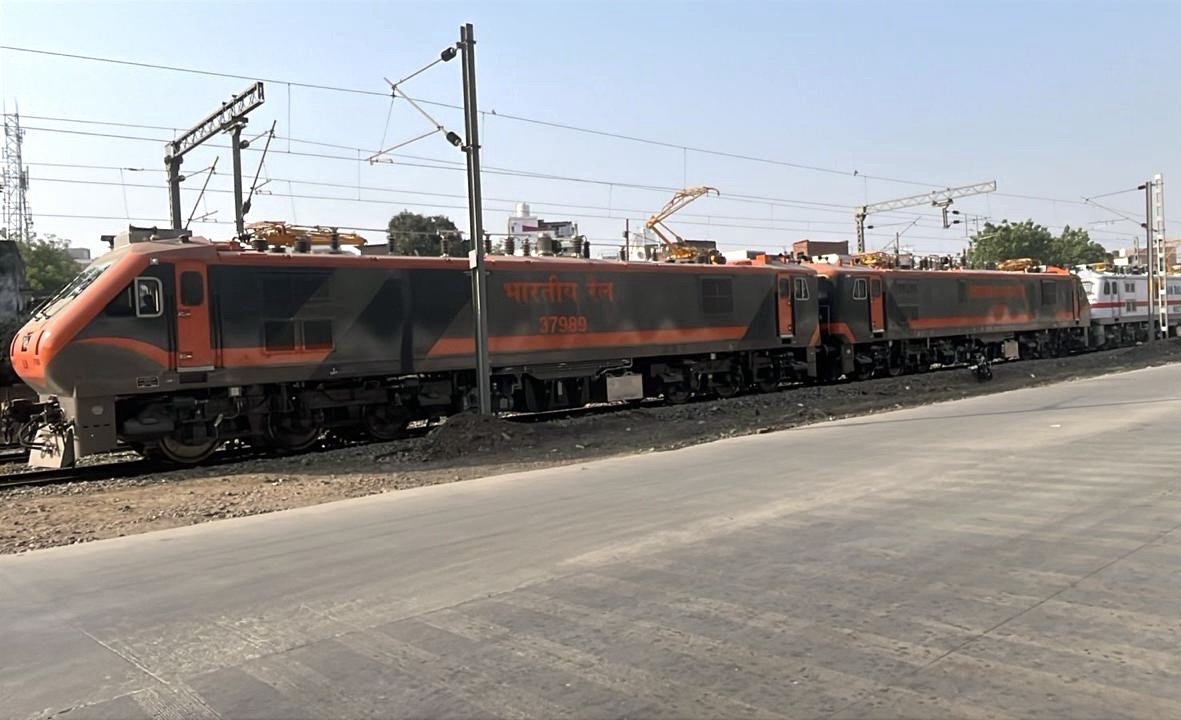
Now consider the second case — the one this publication has been reporting since April. A Howrah-based supplier, dominant #vendor for Amrit Bharat Express locomotive shells, confirmed by XRF spectrometric testing conducted by Railway’s own #Vigilance team to have substituted ordinary IS 2062 structural steel for the mandated CCU anti-corrosion grade. Not once. Across four successive purchase orders spanning November 2024 to April 2026. Twelve locomotives already dispatched to operational sheds at TKD, SGUJ, NGCD, and SPJD. The procurement value? Each loco shell runs to approximately ₹80 lakh. There are roughly 700 shells in the current pipeline, overwhelmingly from this single supplier. The institutional response, as documented in Part-I of this series? A proposal to recover the cost differential — approximately ₹6 per kilogram — and close the matter.
Also Read: “A ₹6 Per Kg Exit Clause for a Fraud Worth Crores”
The BNS sections applicable to both cases are identical. Section 318(4) — cheating by dishonestly inducing delivery of property through deception, carrying imprisonment of up to seven years. Section 61 — criminal conspiracy, where the same method applied systematically across multiple factories and multiple purchase orders satisfies every ingredient the statute requires. The law that moved for a lakh-scale MPCB fraud stands perfectly, precisely still for a #fraud running into hundreds of crores. That stillness is not administrative inertia. It is a choice.
The Fiction of the Approved List
There is a detail that, on its own, should have ended this procurement. It has not.
The #UVAM portal — Indian Railways’ official vendor directory — has deleted the Howrah firm from the approved source list for seven of the eight major sub-assemblies that constitute a locomotive shell. Walk through what that means in structural terms. The head stock assembly: “20% of total shell weight, the primary load-bearing member, the structure into which couplers are fitted at both locomotive ends.” The bolster assembly: “16%, the structural housing for the coil springs that give the locomotive whatever capacity it has to absorb operational shock.” The central underframe: “8%, the member on which the transformer is mounted in underslung condition and to which the bogie pivots are welded.” The centre sill: “12%, the pre-cambered spine of the entire loco body. The side sills, the driver cabs, the side wall panels — each a primary load-bearing member, each now struck off.”
Seven components. Over 90% of the shell’s structural weight. Every single one of them load-bearing. Every single one now struck off.
And yet: the firm remains on the approved list for Loco Shell Assembly as a whole — the complete assembled article — even as the constituent parts have been progressively disqualified. Ask yourself what this means in engineering terms. If you cannot be trusted to supply the spine, the shoulders, the chassis, the driving cabin, and the side body of a locomotive, in what sense are you approved to supply the locomotive? The answer, apparently, is: “in the administrative sense. On a portal. On paper.”
This is not a #loophole being exploited by a clever vendor. It is a fiction being maintained by an institution that has chosen to look away from what its own test results say. #CLW conducted a surprise inspection. Found material non-conformance. Removed the firm from seven component categories. And then — and this is the part that must be stated plainly — kept those findings internal. Did not communicate them to #BLW. Did not communicate them to #PLW. Did not escalate to #RailwayBoard. The vendor knew. The inspecting unit knew. The production units placing fresh orders knew nothing.
Under Section 13 of the Prevention of Corruption Act, 1988, criminal misconduct includes a public servant who dishonestly or fraudulently allows the misappropriation of property entrusted to them or under their control. The suppression of inspection findings that would have halted procurement is not a procedural failure. It has a name in the statute.
Engineering Deniability
When #consignee inspection at BLW formally rejected shells — and the rejection notices exist — something changed. The inspection modality was changed. Consignee inspection removed. Third Party Inspection substituted. The same rejected shells re-entered the system under fresh #TPI certificates.
Third Party Inspection—properly deployed—is a legitimate quality instrument. What happened here is something else. Formally rejected material — rejected under the railway’s own inspection mechanism — was re-certified by a substituted agency and absorbed into active service. Four of those shells now form part of locomotives already running. When something fails, the paper trail is ready: “a TPI certificate exists, the inspection agency will be cited, the railway official who authorised the modality change on already-rejected material will invoke process compliance, and the blame will find its way to a private firm rather than to the decision-maker.”
This is not administration. This is the engineering of deniability with the same precision that was apparently absent from the engineering of the locomotive shells themselves.
There is another detail that sits uneasily alongside this. The inspector who led the factory inspection — the officer whose team produced the unambiguous XRF finding of zero copper content across all structural samples — was transferred from the Loco Fabrication Shop to the Loco Assembly Shop. One does not need to speculate about the reason. The timing speaks clearly enough. And for those inclined to ask what message that transfer sends to every inspection officer in the organisation who might consider doing their job with similar thoroughness — the message has been received. Railway cultures are efficient at transmitting exactly this kind of signal.
Bengal Has Changed. Has Railway Board?
For years, vendors of a certain profile operating out of Howrah carried their business with the confidence that comes not from commercial competence alone but from knowing where to make a call when something went wrong. West Bengal’s political landscape has now changed. The #ecosystem of protection that certain Kolkata-region fabricators relied upon — the ability to insulate themselves from adverse inspection outcomes through proximity to power — is not what it was.
That is not this publication’s political observation. It is the commercial reality that the vendor’s own conduct reflects. The liaisoning continues — as the Editor’s Note below will establish — but the geography of influence has had to shift. That shift matters, because it means the traditional excuse for institutional inaction has evaporated. There is no political weather to wait out. No calculation about timing. The instruments of law are available and the political cover that once complicated their use is diminished.
The #CVC has jurisdiction. The #CBI has jurisdiction. The #PMLA scheduled offence attachment provision — which makes the vendor’s profit from years of grade arbitrage liable as proceeds of crime, given that BNS 318 cheating is a scheduled offence — is available. Railway Board has the Chairman’s own direction of 8 May 2026, in which he told General Managers in a safety video conference that police complaints must be lodged against vendors caught supplying spurious items, as basis for immediate action. That direction was issued with the MPCB case in the frame. Its application to a case of spectrometrically verified fraud across hundreds of crores of safety-critical procurement is not a matter of interpretation. It is a test of whether Railway Board’s Chairman means what he says when he says it to General Managers on camera.
What is additionally difficult to explain is this: “while BLW, PLW, and CLW have individually flagged this vendor’s material failures across different items and different production orders, the vendor has simultaneously been elevated — upgraded — in yet another safety-critical category at one of these production units.” An established pattern of fraud across three production units, multiple purchase orders, and multiple years did not prevent this elevation. It accompanied it. That is not an administrative oversight. That requires an inquiry by the Principal Executive Director (Vigilance) at Railway Board, with CBI involvement.
Silence Is a Position
Railway Board has been aware of this investigation. It is aware now. The question before it is not whether it knew. The question is what it will do with what it knows?
A vendor approved for the whole while being disqualified from over 90% of the parts that constitute the whole is not a vendor at all — it is a legal fiction dressed in tender documentation. Twelve locomotives built with material that failed its specification at the moment the purchase order was accepted are running on Indian tracks today. The codal life of those locomotives — their structural integrity across decades of load, thermal stress, and operational shock — rests on steel that was never what it was supposed to be.
If the head stock is suspect, and the bolster is suspect, and the centre sill and the side walls and the driver cab are all suspect — because the entity that fabricated them has been removed from the approved lists for every one of those components on the basis of documented material fraud — then on what engineering basis, and on whose authority, are the assembled locomotives they constitute being declared fit to haul passengers?
That question is not rhetorical. It has a legal dimension, a safety dimension, and an accountability dimension. Railway Board’s continued silence on it is not a neutral administrative posture. It is a position. And positions have consequences.
Editor’s Note
The publication of this investigation has drawn a response beyond the editorial. Following Part-I, the Editor of Railwhispers.com received threatening phone calls, made allegedly on behalf of an #agent of the firm at the centre of this reporting. The individual placing the calls claimed to hold an influential position in the Uttar Pradesh government — significant, given that the firm’s #liaisoner operates out of the Prime Minister’s parliamentary constituency, and that BLW, the production unit where the fraud is most extensively documented, is located in Varanasi.
When the Editor informed the caller that he intended to take the matter to social media — tagging the Chief Minister of Uttar Pradesh, a figure not associated with tolerance of #Corruption or the intimidation of journalists — and to publicly flag that a person apparently from the Chief Minister’s own administration was seeking to protect the corrupt interests of a vendor operating in the PM’s constituency, the calls ceased. The caller apologised. The investigation continues..