

A ₹6 Per Kg Exit Clause for a Fraud Worth Crores
The shells of locomotives were fabricated using ordinary steel in place of the specified anti-corrosion CCU grade steel, it is not a procurement irregularity—It is a total fraud
When the institutional response is to calculate the cost differential per kilogram and recover only that much—it ceases to be a failure of enforcement—it becomes complicity
When vigilance recommends a slap on the wrist for deliberate raw material substitution in safety-critical locomotive shells, it is not a quality issue being resolved — it is a crime being buried !
The #AmritBharatExpress is Prime Minister Narendra Modi’s flagship passenger train initiative and the Railway Minister’s dream project. Its locomotives, manufactured at Banaras Locomotive Works (#BLW), Varanasi, are meant to embody a new era of Indian Railways manufacturing capability. So when a #whistleblower submits documents — backed by XRF spectrometer test reports, formal rejection notices, and internal vigilance correspondence — establishing that the very #shells of these #locomotives were fabricated using ordinary steel in place of the specified anti-corrosion CCU grade steel, it is not a procurement irregularity—It is a total #fraud. And when the institutional response is to calculate the cost differential per kilogram and recover only that much, it ceases to be a failure of enforcement. It becomes complicity.
What the Whistleblower Has Established
Locomotive shells for the Amrit Bharat trains are procured per BLW specification BLW/DES/MISC/784. That #specification mandates #CCU grade steel — a copper-bearing, anti-corrosion variety essential to structural life under the traction and thermal stresses a push-pull locomotive sustains across its service life. Normal structural steel, classified as IS 2062, looks identical to CCU grade to the naked eye. The cost difference? Approximately Rs. 6 per kilogram.
Across four successive purchase orders — (PO No. 0324500510XXXX dated 06/11/2024 for 4 Sets, PO No. 0325252110XXXX dated 03/09/2025 for 10 Sets, PO No. 0325123610XXXX dated 18/10/2025 for 24 Sets, and PO No. 0326101810XXXX dated 11/04/2026 for 70 Sets) — the Howrah-based supplier submitted shells fabricated from IS 2062 grade steel while billing for — and accepting payment at rates consistent with — CCU grade. The substitution was confirmed by handheld XRF spectrometer testing conducted by BLW’s own vigilance team, comprising interdisciplinary team. Their joint inspection at the supplier’s factory yielded an unambiguous finding: zero copper content across all structural plates and sections tested. Not a single sample met the CCU specification.
Twelve locomotives carrying these shells have already been dispatched to operational sheds at TKD (WCR), SGUJ (NFR), NGCD (NFR), and SPJD (ECR). Two more await dispatch from BLW. Two are under active consideration for rejection. Four shells remain detained outside BLW’s gates.
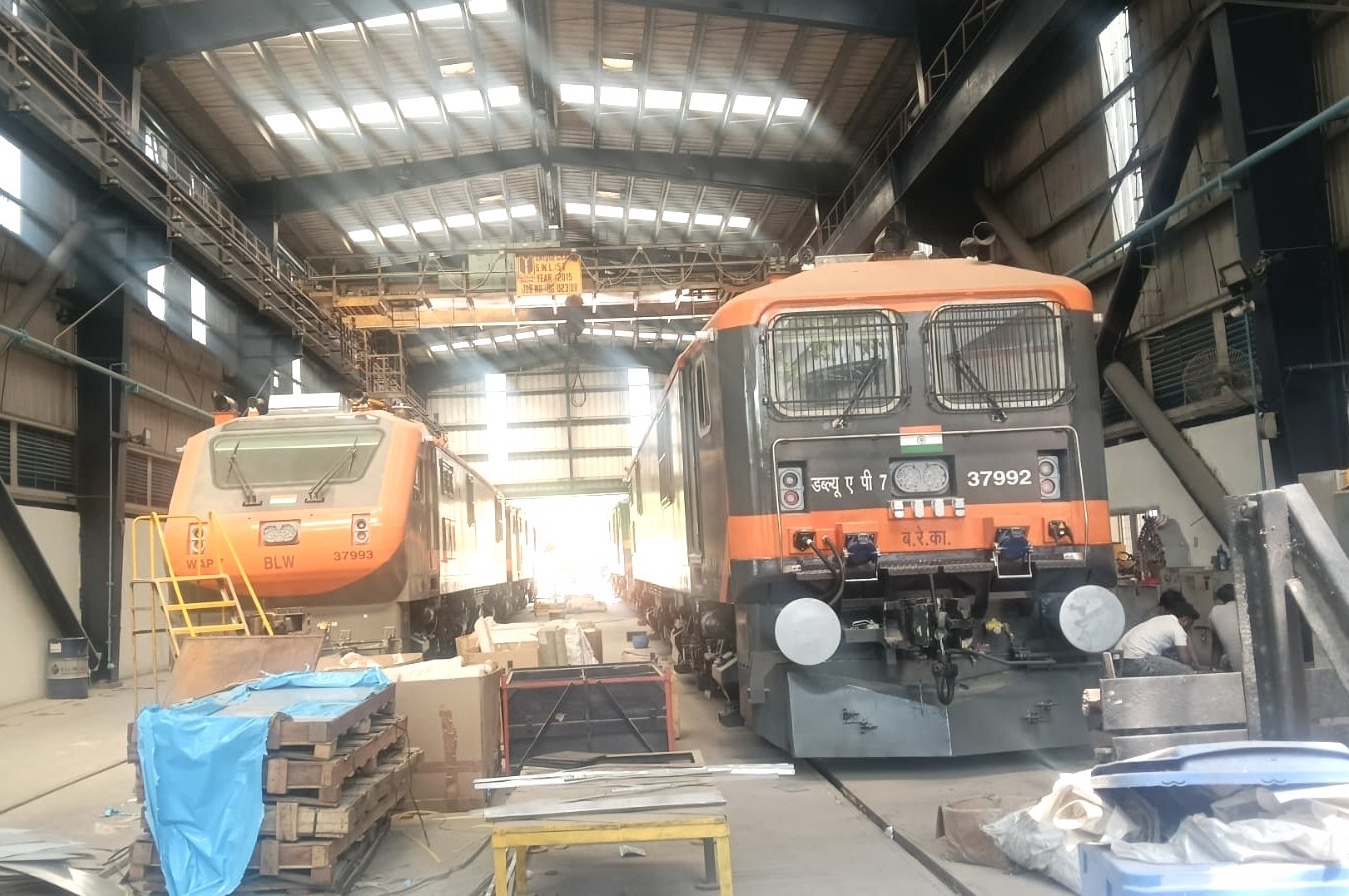
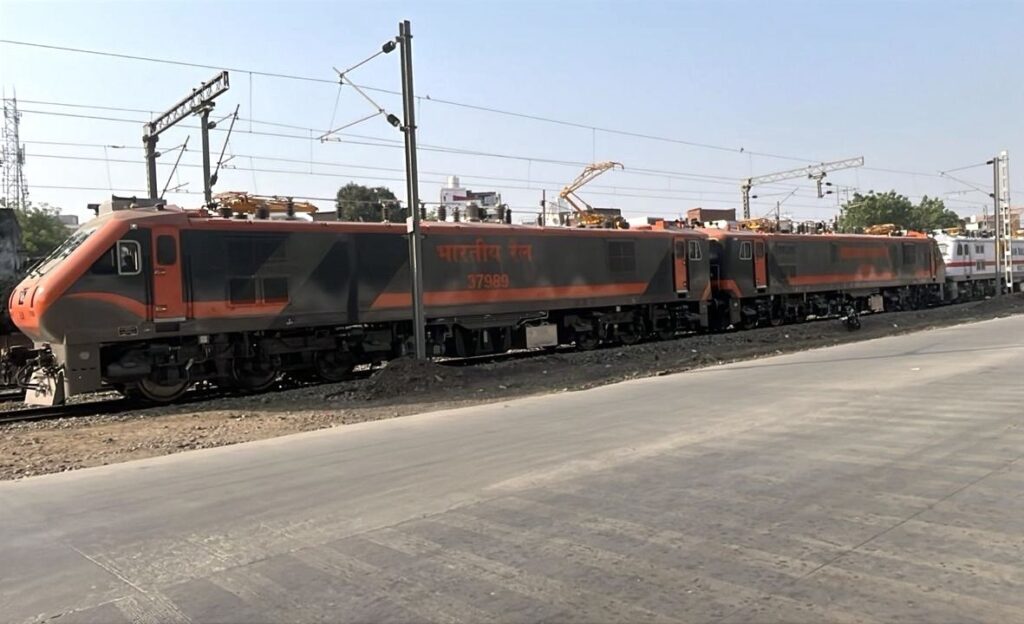
This Is Not a Quality Issue
Institutional language is being deployed here with precision — and with legal consequence. Describing the substitution of specified raw material as a “quality issue” is a mischaracterisation. Quality issues encompass dimensional deviations, weld defects, surface finish non-conformance — lapses that can arise from process failures without fraudulent intent. “Submitting invoices for CCU grade steel while supplying IS 2062 grade steel is not a process lapse. It is deliberate misrepresentation in a government contract, from the moment of bid submission.”
Under the Bharatiya Nyaya Sanhita, 2023, Section 318(4) — which replaces the erstwhile IPC Section 420 — cheating is defined as dishonestly inducing delivery of property through deception, carrying imprisonment of up to seven years and fine. The Supreme Court in A.M. Mohan v. The State (2023) reaffirmed that the determining factor is dishonest intent at the moment of inducement, not actual loss. “A supplier who accepts a purchase order specifying CCU grade steel, bids at a price only sustainable through substitution of IS 2062 grade, and then executes that substitution, has formed the dishonest intent at the very point of quoting. The reverse auction process — which crashed rates below viable thresholds — is not evidence of competitive efficiency. It is the financial fingerprint of planned fraud.”
The conspiracy dimension compounds liability further. This is not an isolated instance. BLW Vigilance findings, PLW vigilance actions from April 2025, CLW rejections earlier this year — all involving the same Kolkata-based supplier and the same substitution — “satisfy the ingredients of criminal conspiracy under BNS Section 61. Systematic, multi-factory, multi-year repetition of the identical method is not coincidence. It points to an organised operation.”
See our earlier article: April 2, 2026: “Too Big to Fail ???”
The Institutional Cover and Where the Law Points
What transforms #vendor-fraud into institutional failure is the documented response of those in authority. After BLW’s vigilance team submitted its findings to #PCEE BLW, #CEE-Inspection, and the #DyCCMT-Lab — with a copy to the #CVO — the institutional outcome has been the inverse of what law requires.
The supervisor who led the factory inspection was transferred from the Loco Fabrication Shop to the Loco Assembly Shop. The inspection agency for six formally rejected shells was changed from consignee inspection to a Third Party Inspection agency, whereupon the same rejected shells were allegedly re-supplied under fresh inspection certificates and accepted. Four of those shells now form part of locomotives in active service where codal life of locomotives is in question.
The resolution being internally advocated? Penalise the supplier at the cost differential between CCU and IS 2062 grade. Six rupees per kilogram. For locomotives fabricated from hundreds of tonnes of steel, expected to serve for decades in safety-critical haulage, the institutional instinct is to settle for what amounts to a nuisance recovery.
This is not a quality resolution. It is a structured exit from accountability. For the public servants—who is enjoying with lakhs of pay and perks, and facilities—facilitating this exit, the Prevention of Corruption Act, 1988 is precise. Section 13 defines criminal misconduct to include a public servant who dishonestly allows misappropriation of property under their control. Section 7 covers gratification for official acts. Abetment under Section 12 requires no proof of completed offence — facilitation is sufficient, with imprisonment of up to five years. The PMLA angle adds further consequence: “BNS 318 cheating is a scheduled offence under the Prevention of Money Laundering Act, 2002, making the supplier’s profit from years of grade arbitrage liable to attachment as proceeds of crime.”
It is not out of place to mention that Dy.CVO is a plant of “vigilance trimurti” and allegedly still involved in corrupt activities. Granting second vigilance tenure in continuation even after transfer to another unit reeks of conspiracy. Why cannot these vigilance officers work in departments and roles for which they were recruited?
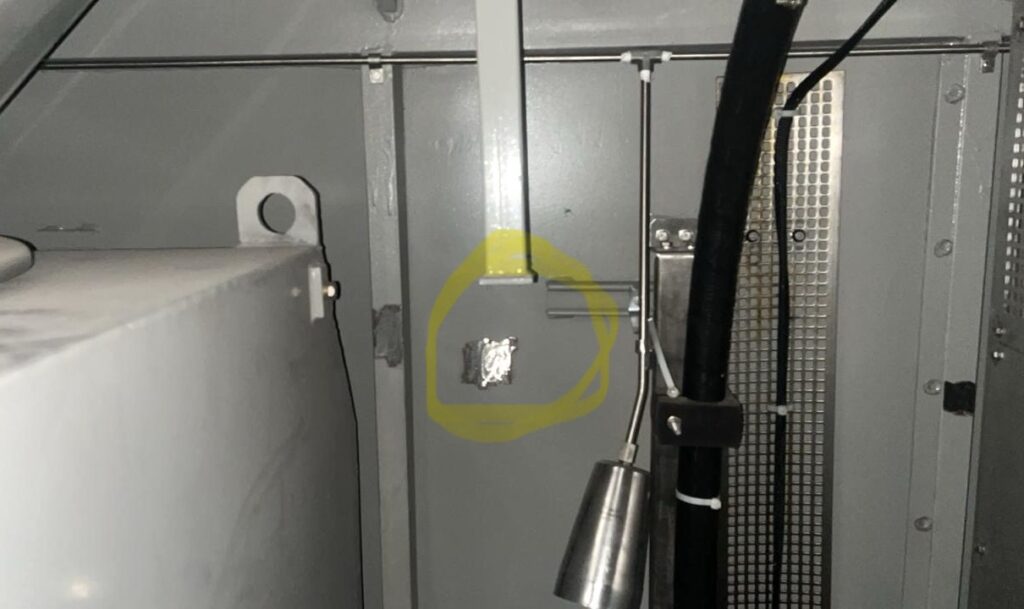
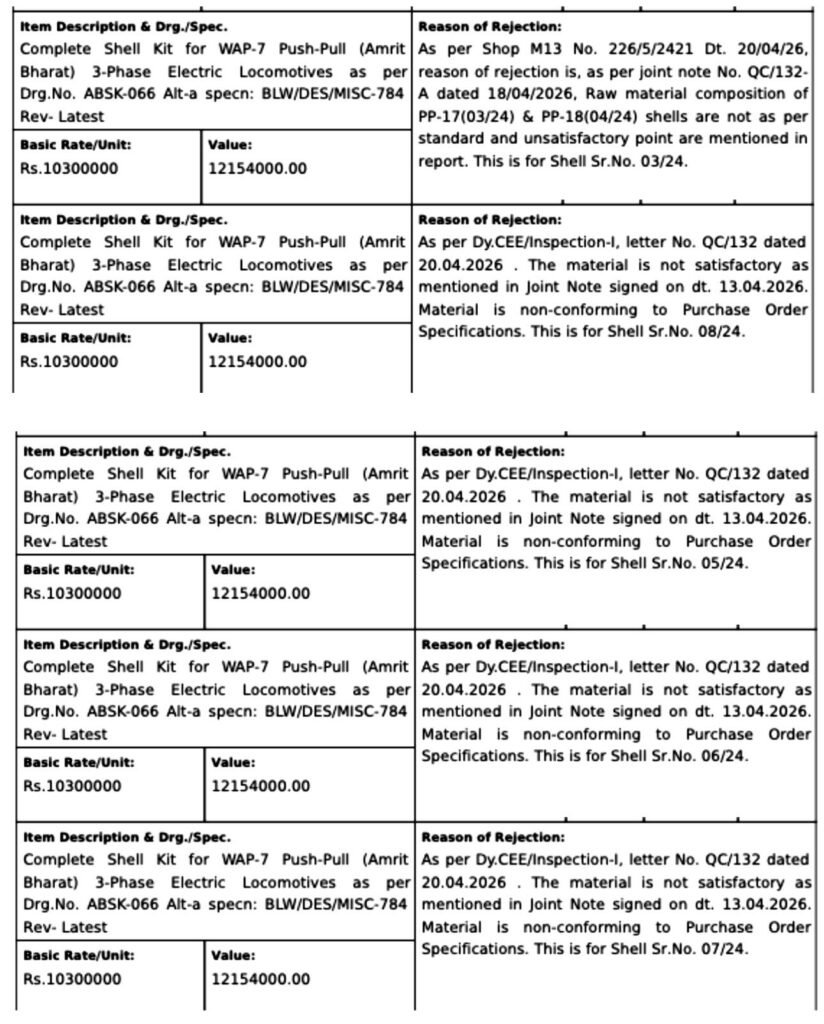
What the Chairman Said on 8 May
On 9 May, the Chairman of the Railway Board, in his monthly video conference on safety, directed that a police complaint must be lodged against a vendor caught supplying spurious items. Several General Managers present echoed the call. The Prime Minister has himself flagged quality as a national concern on multiple occasions.
Against this backdrop, the proposal to resolve the “Amrit Bharat shell fraud” with a ₹6/kg recovery is not merely inadequate. It is a direct defiance of a direction issued from the top of the organisation, delivered days before this report goes to press.
What Must Now Happen
In routine, #Steel quality is verified by checking document trail-on assumption that you are dealing with a well meaning Part-I vendor. When vendor knows there is no adverse consequence to elaborate cheating—what stops him from supplying cheaper low grade steel? While it is learnt that this vendor faced downgrading in a particular child item, the very same vendor has been upgraded in bogie frame—a safety critical item. What is surprising is, when there is established trail of #cheating across different IR units across different POs and a consistent pattern has been established-in light of that how can #CLW upgrade the vendor in yet another safety critical item?
This is precisely what has created culture of malfeasance in railways—a culture which promotes and protects poor quality. Role of vigilance officers has been central to this racket. The darkest phase of railway vigilance saw a “Trimurti” at the helm—this ran an “extortion racket” which protected these wrongdoings routinely. Officers who refused to bend saw their will broken and cast aside. This is the reason why we have taken stand against “career vigilance officers”. The team which replaced and brought sanity in board vigilance has moved out on promotion-it must be replenished with equally strong willed officers who have courage to stand with upright officers and punish such cheats. Production Units must be rid of such ‘career vigilance officers’. We have raised issue of BLW’s vigilance in past and concern still persists.
All twelve operational locomotives must be subjected to independent raw material verification — by the Central Vigilance Commission (#CVC) or an external accredited agency, principally not the same inspection chain that accepted the defective shells. Detained shells must not be unloaded or accepted. Withheld locomotives must not be dispatched.
A police complaint under BNS Sections 318 and 61 must be lodged as Chairman asked for in a different case of cheating in supplies on May 8. PCA provisions must be invoked against officers who facilitated the re-acceptance of formally rejected material, transferred the team which detected this, and are now advocating token recovery as closure and compromising with the quality of important base assets—like loco shell.
Elevation of the vendor in another safety critical item, attempts to give further allocation to the same supplier in the most recent tender — even as its materials face active rejection (by PLW, BLW & CLW) requires an immediate inquiry by #PED/Vigilance, Railway Board along with CBI.
Railway Board’s silence on all of this is not a neutral administrative posture—it is a position.