

How Indian Railways Switched Off Its Own Power—When Incompetence Represents—The Current Goes Out, Part-1
— A two-part investigation into the ₹20,000-crore legal catastrophe nobody is talking about
The mission was 100% electric. The achievement is a ₹20,000-crore liability
On 8 May 2026, the Supreme Court of India delivered a 59-page judgment that most newspapers buried somewhere between the cricket scores and the monsoon forecast. Actually it deserves front pages. The court, in “Indian Railways v. West Bengal State Electricity Distribution Company Limited” (2026 INSC 464), ruled conclusively that #IndianRailways is not a Deemed Distribution Licensee (#DDL) under the Electricity Act, 2003. It is a #consumer. An ordinary, paying #consumer — like your corner grocery store, except the bill runs to thousands of crores.
The immediate arithmetic is brutal. Back-of-the-envelope projections by industry observers put the outstanding Cross-Subsidy Surcharge and Additional Surcharge liability — the charges Indian Railways had avoided by claiming DDL status — somewhere between ₹15,000 and ₹20,000 crore. The annual additional outgo going forward is estimated at upwards of ₹2,000 crore. This is not a rounding error. This is a freight train, arriving on schedule, carrying only debt.
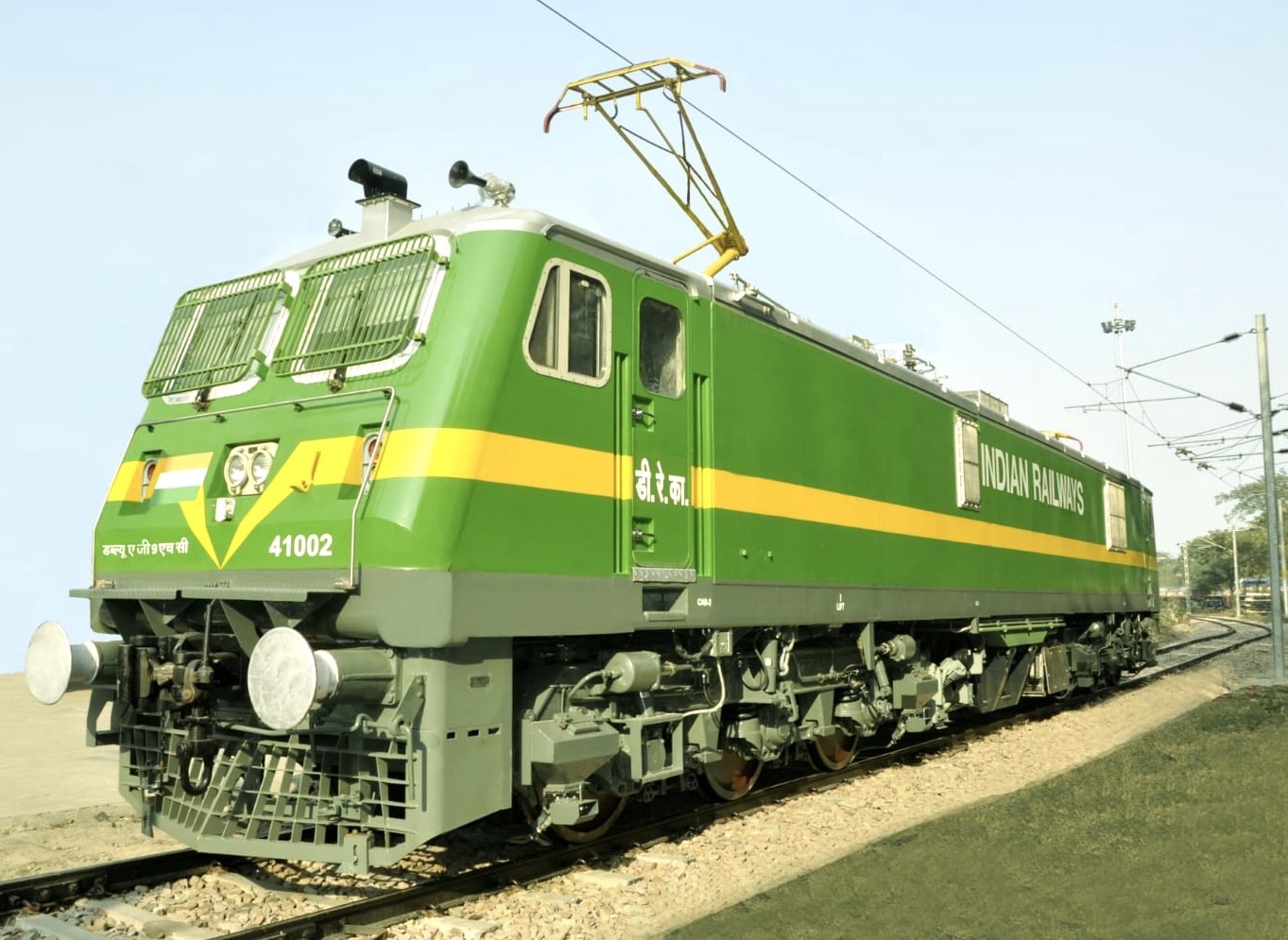
The irony deserves a moment of quiet contemplation. Indian Railways has spent the better part of the last decade positioning its electrification mission as the single greatest green transition story in public transport history. The last diesel-hauled passenger train is notionally gone. Catenary wires stretch from Kanyakumari to Dibrugarh. Posters with clean locomotives against electric-blue skies have been printed in quantity and displayed at stations. And now the organisation that runs on electricity — that “is” electricity in motion — will pay a surcharge every year for the privilege of buying that electricity. The current goes in. The money goes out.
To understand how this happened, one must trace the route backwards—
In November 2015, Indian Railways filed a petition before the Central Electricity Regulatory Commission (#CERC). The proposition was straightforward: “Railways is authorised under Section 11 of the Railways Act to establish and operate distribution infrastructure. Being a department of the Central Government, it qualifies as ‘Appropriate Government’ under Section 2(5)(a) of the Electricity Act. Therefore, it is a Deemed Distribution Licensee. As a DDL, it should receive non-discriminatory open access to procure power from wherever it wishes — without paying the Cross-Subsidy Surcharge or Additional Surcharge levied on ordinary consumers.”
CERC agreed. Order dated 5 November 2015: “Indian Railways is a DDL.” It was a win. The Railway Board files were marked settled. The officials who argued the case presumably got good entries in their ACRs (Annual Confidential Reports).
Then the distribution companies — WBSEDCL, MERC, OERC, RERC, HERC, PSERC, MPERC, KSERC — filed appeals before the Appellate Tribunal for Electricity.
This was the real contest. #APTEL is where the case would be tried on merits. Eight state electricity regulatory commissions (#SERC), with serious legal firepower and significant financial stakes, were queuing up to dismantle the DDL claim. Five of those eight SERCs had already held independently that Railways is not a DDL. More critically, the Supreme Court’s own 2014 decision in “Sesa Sterlite v. Orissa Electricity Regulatory Commission” had already established a functionality test: “even if an entity holds DDL status, if it uses electricity purely for its own consumption and has no consumers, it is itself a consumer and must pay the surcharges.” That judgment was three years old when APTEL proceedings began in earnest. It was binding precedent.
Indian Railways’ legal team had years to engage with it. Years to build arguments, counter the functionality test, explain why traction sub-stations and the 25kV catenary system constituted a ‘distribution system’ serving ‘consumers’ within the meaning of the Electricity Act by statutory construct of deeming. The statutory ground was not hostile — Section 173 of the Electricity Act itself provides that the Railways Act shall prevail in any inconsistency between the two statutes. That provision was a foundation. It needed building upon.
The arguments that eventually reached APTEL — and then the Supreme Court — suggest either those years were not used or the wrong people spent them.
The primary documentary anchor of Railways’ claim was a letter. Letter No. 25/19/2004-R&R dated 6 May 2014, issued by the Ministry of Power, declaring Railways a deemed licensee. A Ministry communication. Not a statute. Not a judicial precedent. APTEL identified it as an administrative directive under Section 107 of the Electricity Act — not mandatory in nature, and therefore not determinative. In the Railways’ legal strategy, the letter had quietly come to substitute for the statute.
The deeper problem was structural. The stronger position — that DDL status flows from a reading of the Railways Act and the Electricity Act together, not from any Ministry communication, and that no separate notification was required to confer it — was never argued with sufficient conviction. That position was available. It sat in the statutes but was left unengaged. When APTEL demolished the letter, there was nothing standing behind it. Other Central Government entities had obtained DDL status through the same route — administrative recognition, not a formal notification — and those determinations had held. Railways was a larger target. The distinction between a convenient precedent and a defended position had not been thought through.
“Where are all those from #REMCL and the Energy Management Directorate who had their hands on this file?”, a retired senior railway officer asked. The answer, he observed, was not difficult to find. They were all still in Delhi — what this publication has elsewhere called the “Khan Market Gang” (#KMG) and All India Delhi Service (#AIDS) of the railway establishment: “officers for whom proximity to power in the capital is the career, and a posting outside it is the punishment.”
There was something worse still. In 2014, Railway Board had gone to Parliament seeking an amendment to the Electricity Act — specifically to insert a proviso explicitly recognising “Railways” as a “deemed licensee”. Parliament’s Standing Committee rejected it. In 2018, another attempt. Rejected again. By the time the case reached the Supreme Court, those failed bids had become exhibits for the other side. The court treated them as Railways’ own admission: it knew it was not a DDL under the existing statute; it had been trying to become one. The lawyers who built the strategy apparently did not see — or did not care — that their legislative history had become a weapon aimed at their own client.
Nobody in New Delhi appears to have paused to question the underlying diagnosis. An amendment was not what the case required. Sufficient statutory material existed to make the argument, had it been properly marshalled from the beginning. State electricity regulators had been eyeing railway traction as revenue territory for decades. That contest was never going to yield to a Ministry letter or a rejected bill. It needed lawyers who had read the judgments — and officers who placed the organisation’s interest above their own.
This is not bad luck. This is what happens when legal strategy rests on status rather than substance, on the comfortable belief that being the government is itself sufficient justification. This is what happens when the officers overseeing the file care more about which city they are posted in than about the matter they are supposed to be handling.
The senior-most officers involved in this decade-long dispute were, by every account available, headquartered in New Delhi. The hearings were in New Delhi. The briefs were filed from New Delhi. And yet the foundational work — engaging seriously with “Sesa Sterlite”, anticipating the functionality test, recognising what the failed amendment bills would do to the court argument — appears to have been nobody’s priority. In an organisation where a posting in Delhi represents the apex of personal ambition, defending the organisation’s actual interests in Delhi tends to get reclassified as a junior officer’s concern.
Junior officers, in such environments, learn quickly what their seniors value. This file, across a decade, answered that question plainly enough.
The incompetence of Railway Board and REMCL is now inscribed in 59 pages of Supreme Court prose. And the damage runs further than the surcharge bill. The Railways Act — the statutory spine of India’s national rail network — now stands in a weakened position relative to state regulatory frameworks. The careful balance between central authority and state oversight, built over decades of judicial and legislative calibration, has been disturbed. Not by the Supreme Court. But by those who failed to argue it.
Editorial Note: Based on inputs of serving and retired officers, compiled by a lawyer, final edits with AI assistance.