

Central Railway Guards-Bell Protest—Highly Paid but the Public Interest & Accountability Zero! Part-2
The ₹2 Lakh Ransom: How Central Railway’s ‘Elite’ Guards Hold 4 Million Commuters Hostage
“While the right to protest exists, it does not extend to the right to sabotage public infrastructure. In a democracy, the “right of the employee” does not supersede the “right to life and movement” of the 4 million taxpayers who fund their existence!”
The recent friction within the Mumbai Suburban section of the #CentralRailway (CR) has exposed a startling disconnect between the “Running Staff” and their duty to the public. While the administration attempts to implement basic safety protocols to prevent platform overshooting, the Guard cadre has responded with a “Work to Rule” agitation—a tactical maneuver that effectively paralyzes the Mumbai metropolitan city’s lifeline while technically remaining within the bounds of a manual they otherwise choose to ignore.
Also Read: “Central Railway Guards-Bell Protest—Highly Paid but the Public Interest & Accountability Zero! Part-1”
1. The Safety Directive: A Rational Order Met with Irrational Resistance
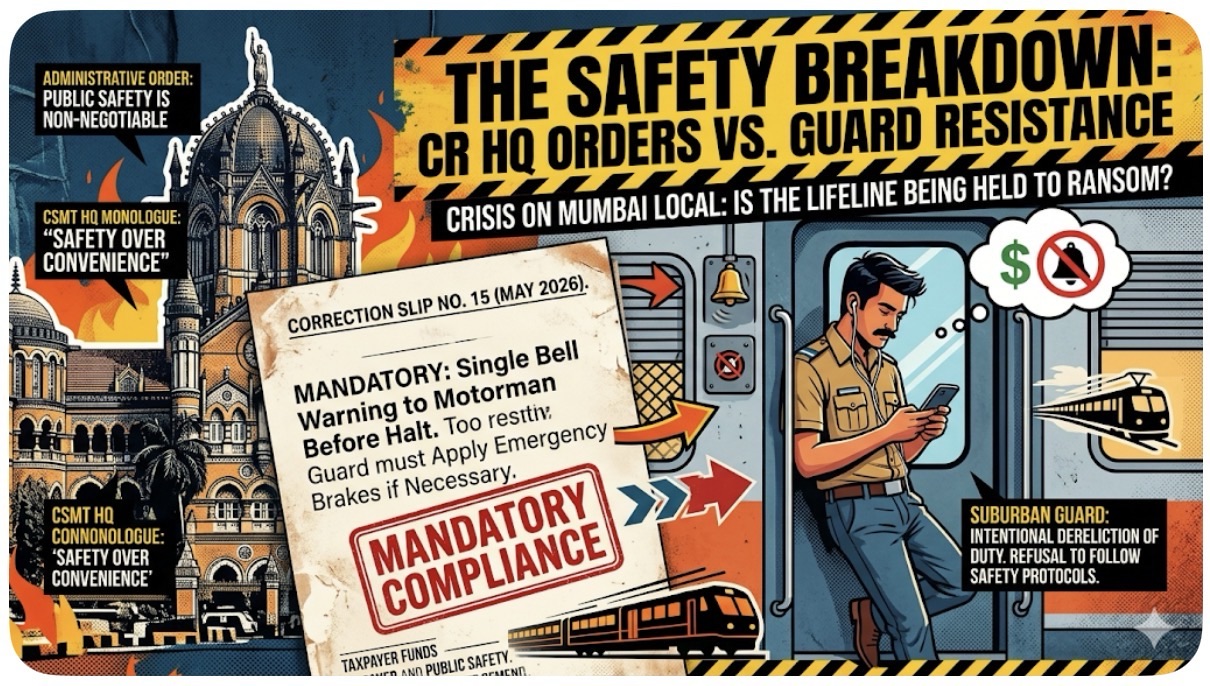
The Correction Slip no. 15 (issued on May 7, 2026) is a straightforward #Safety intervention. It mandates that Guards provide a “single bell” warning to Motormen before a scheduled halt and apply emergency brakes if the Motorman fails to respond or overspeeds.
- The Intent: To add a layer of redundancy. If a Motorman is distracted or incapacitated, the Guard acts as the fail-safe.
- The Refusal: Guards argue that “one bell” is traditionally an emergency stop signal, and changing its meaning causes “confusion.” However, in a professional environment, adapting to updated operating manuals is a core job requirement, not an optional suggestion.
- The Reality: The refusal to follow this order is less about “technical confusion” and more about avoiding the burden of accountability. By applying brakes, the #Guard becomes a co-responsible party for the train’s movement—a responsibility they seem desperate to dodge.
2. “Work to Rule” Paradox: Weaponizing the Manual
The “Work to Rule” is a unique form of industrial action where employees follow every minor regulation to the letter to cause delays.
- How they justify it: They claim they are “prioritizing safety” by adhering to older, slower protocols.
- The Hypocrisy: This is a bad-faith interpretation of the law. Government servants, under the Central Civil Services (Conduct) Rules, are bound to follow the lawful orders of their superiors. Refusing a signed administrative order from the Principal Chief Operations Manager (#PCOM) is, by definition, insubordination.
- The Democratic Fallacy: While the right to protest exists, it does not extend to the right to sabotage public infrastructure. In a democracy, the “right of the employee” does not supersede the “right to life and movement” of the 4 million taxpayers who fund their existence.
3. The Economic Disproportion: High Pay, Low Accountability
As noted in the compensation breakdown, a senior Mumbai Guard or Motorman is among the highest-paid non-gazetted employees in the nation.
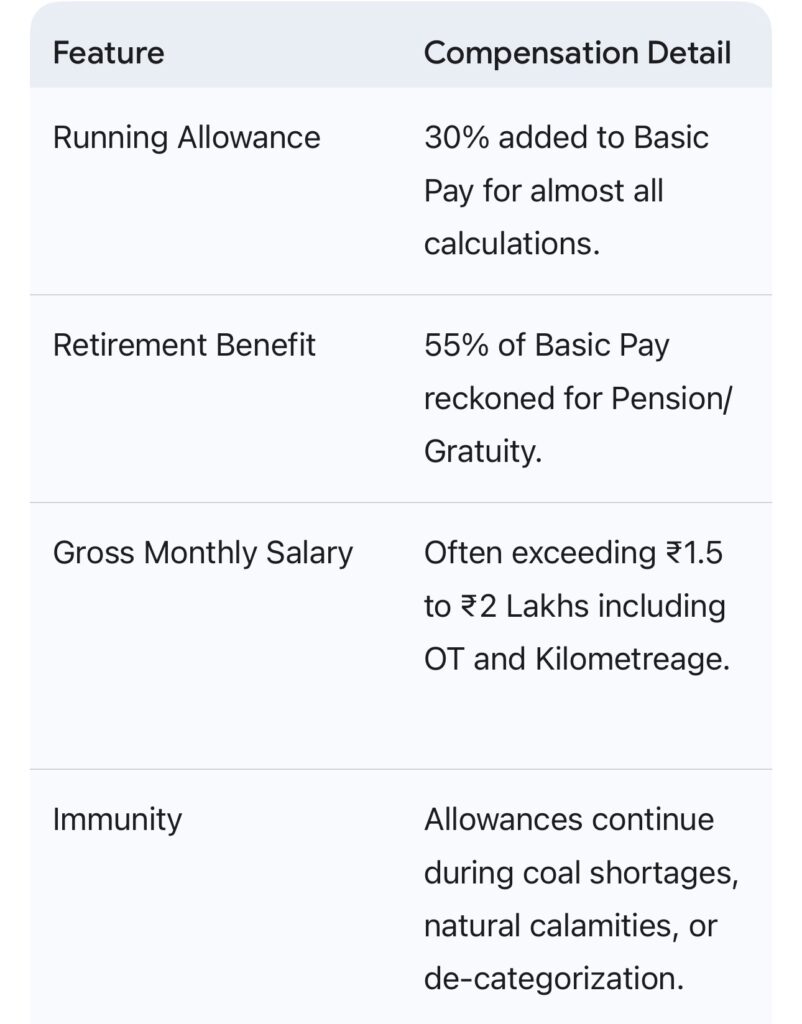
When an employee earns more than the Branch Officers supervising them, a “God Complex” often develops. The taxpayer is essentially funding a lifestyle of elite-tier compensation for a workforce that refuses to adopt a simple bell-code change intended to save lives.
4. Why the Administration “Surrenders”: The Weak Point
The Central Railway administration often appears to “surrender” (as seen in the withdrawal or softening of such slips) due to two primary vulnerabilities:
- The “Mumbai Factor”: The suburban system is a powder keg. A 15-minute delay caused by a “Work to Rule” agitation can lead to passenger riots, burning of stations, and a total collapse of the city’s economy. The administration prioritizes immediate civil peace over long-term disciplinary integrity.
- Union Hegemony: The Running Staff unions are incredibly powerful. They know that the administration cannot “fire and replace” 1,000 highly trained Guards overnight. This monopoly on a specialized skill set is used as a lever to #blackmail the management.
Critical Conclusion: The Erosion of Public Trust
The behavior of the Mumbai suburban Guards is a textbook example of irresponsible trade unionism. By refusing to acknowledge a safety order while drawing salaries that place them in the top 1% of Indian earners, they have forfeited the moral high ground.
Allowing this level of “freedom” to government servants is not democracy; it is institutional capture. If a Guard can refuse to apply a brake to save a train from overshooting a platform, they are no longer a “Train Manager”—they are a passenger with a paycheck. The administration’s failure to enforce “Correction Slip 15” with disciplinary action (such as Dies-Non or suspension) only emboldens this culture of defiance at the taxpayer’s expense. Contd.