

IR Electrification Cuts Diesel Consumption by 178 Crore Litres in 2024–25, Achieving a 62% Reduction Since 2016–17
25 States Achieve 100% Railway Electrification; 10,932 Route Kilometres Electrified Since 2023–24
Advanced Waste Management Including Bio-Toilets, Segregated Bins, Sewage Treatment, Bottle Crushing Machines, and Swachh Bharat Campaigns Enhancing Passenger Experience
Delhi (PIB): Electrification of railway network on Indian Railways (IR) has been taken up in mission mode. So far, about 99.4% of Broad Gauge (BG) network has been electrified. The electrification in remaining network has been taken up.
Electrification carried out during 2014-25 and before 2014 is as under:
Period Route KM
Before 2014 (about 60 yrs) 21,801
2014-25 46,900
Zone wise status of electrification is as under:
SN ZONE. % Electrified
- Central Railway 100%
- East Coast Railway 100%
- East Central Railway 100%
- Eastern Railway 100%
- Konkan Railway 100%
- Kolkata Metro 100%
- North Central Railway 100%
- North Eastern Railway 100%
- Northern Railway 100%
- South Central Railway 100%
- S E C Railway 100%
- South Eastern Railway 100%
- West Central Railway 100%
- Western Railway 100%
- North Western Railway 99%
- N F Railway 99%
- Southern Railway 98%
- South Western Railway 96%
State/UT wise status of electrification is as under:
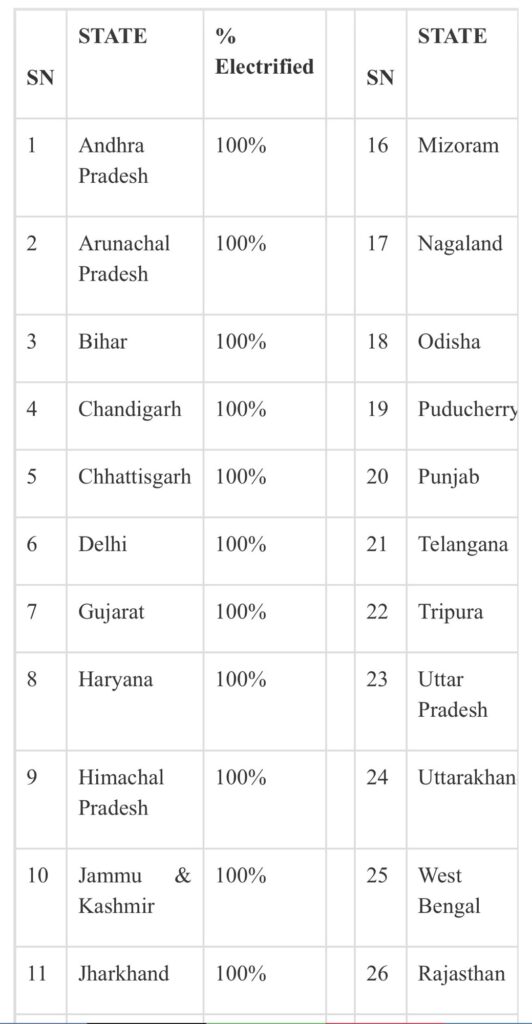
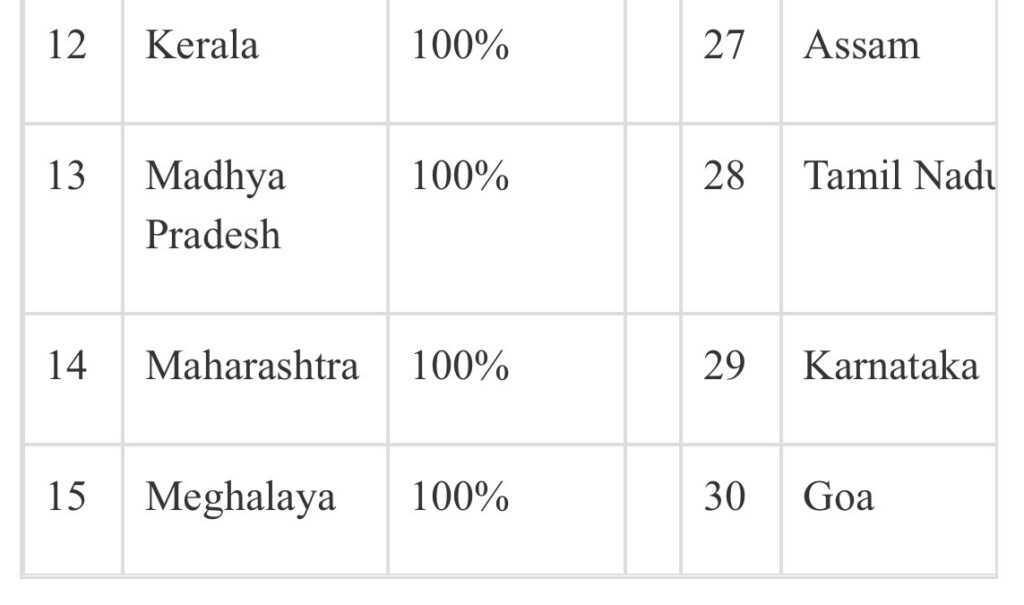
All new line / multi-tracking projects are being sanctioned and constructed with electrification.
During last five years (2020-21 to 2024-25), expenditure amounting to Rs. 29,826 crore has been done on railway electrification projects including Tamil Nadu.
Since 2023-24, 10,932 Rkm electrification has been done till Jan’ 2026.
The completion of Electrification project(s) depends on various factors like forest clearances by officials of forest department, shifting of infringing utilities, statutory clearances from various authorities, geological and topographical conditions of area, law & order situation in the area of project(s) site, number of working months in a year for particular project site due to climatic conditions etc. All these factors affect the completion time of the project(s).
With electrification, there has been reduction in the consumption of diesel on Indian Railways. Indian Railways have been able to save 178 crore litre in Diesel consumption in the year 2024-25 with respect to 2016-17, which is a saving of 62%, thus reducing the import dependency of crude oil.
Amount spent by Indian Railways on total energy consumption for traction during 2024-25 is ₹ 32,378 crores.
Details of the amount spent by Indian Railways on the maintenance of electric and diesel locomotives are available in Annual Statistical Statement of Indian Railways which is available on website of Indian Railways (https://indianrailways.gov.in).
Railways is moving towards electric traction because of the environmental and cost considerations. While tests on bio-diesel have been done, electric traction is far more beneficial than bio-diesel.
Waste Management
Effective management including disposal of waste generated in trains and Railway stations, catering units and coaches is accorded high priority by Indian Railways for enhanced users’ experience. Various initiatives taken in this regard are as follows:-
- Waste collected inside trains is disposed of at nominated en-route stations, identified for waste disposal.
- On Board Housekeeping Staff are strictly mandated not to throw garbage on tracks and strict penalties are imposed on violation.
- Rag picking is done along railway tracks to maintain cleanliness.
- Plastic Bottle Crushing Machines (PBCMs) are installed at stations as per requirement.
- Provision of two bin type dustbins has been carried out at various stations for segregation of bio-degradable and non-biodegradable waste, at source.
- Based on local conditions, feasibility and requirement, tie-ups for waste disposal, have been made between local Railway authorities and municipal bodies.
- Infrastructure like Sewage treatment plants (STPs), Effluent Treatment plants (ETPs), Material Recovery Facility (MRF) has been installed and commissioned, on need basis, at a number of locations over Indian Railways.
- Passenger awareness campaigns are regularly conducted across Indian Railways for encouraging them to dispose garbage in dustbins provided in trains.
- Regular checks/surprise checks are conducted by supervisors/senior officials at Divisional, Zonal & Headquarter level.
- Special Cleanliness Campaigns under Swachh Bharat Abhiyan and cleanliness drives/campaigns are organized regularly over Indian Railways with the objective to achieve significant and sustainable improvements in cleanliness standards.
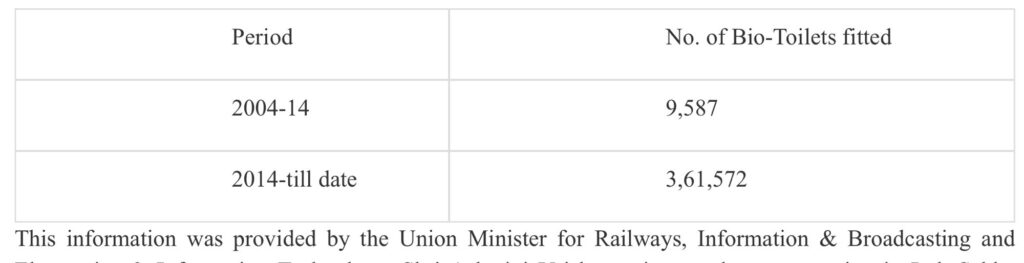
- Elimination of direct discharge of human waste from trains through installation of bio-toilets in passenger coaches. The details of provision of Bio-toilets are as under:
This information was provided by the Union Minister for Railways, Information & Broadcasting and Electronics & Information Technology, Shri Ashwini Vaishnaw, in a reply to a question in Lok Sabha on 11 February 2026.