

Indian Railways: The Cost of Entitlement
Indian Railways now runs on bite-sized zones, no rotation of officers, and endless money for projects. A service that once produced engineers of national standing now behaves like a municipal office, with clerks to match.
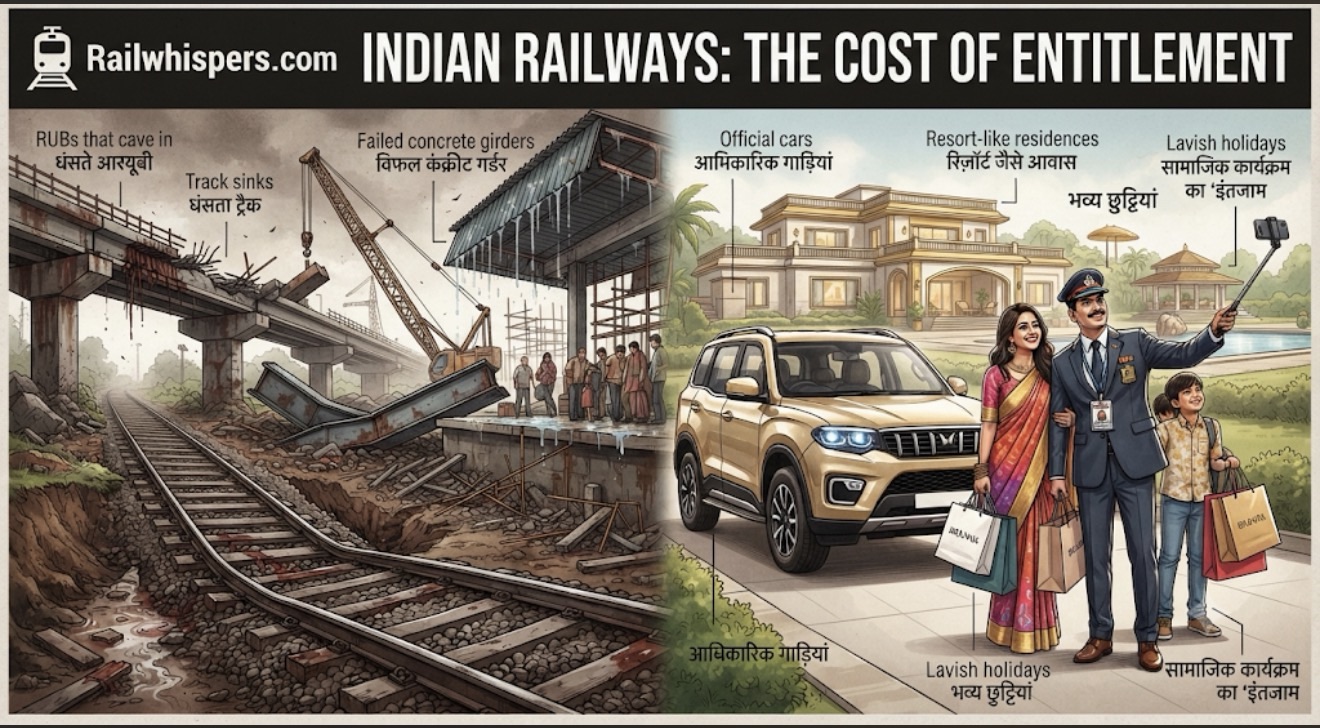
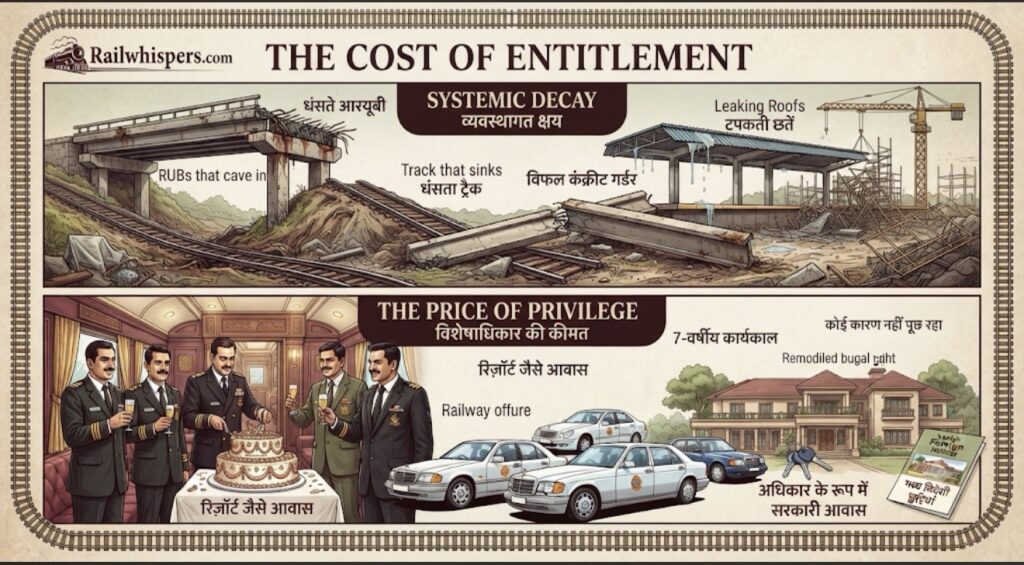
The signs are on public display. Several official cars as a matter of right. Official residences remodelled and furnished like resorts. Families living like celebrities. Foreign holidays that would embarrass a film star. How can someone from middle class in just few years start to live as if they were born in wealth? How is modification of official residences never questioned?
Now a new transfer policy for the Construction Department, controlled by the Chairman, Railway Board, grants a 7-year tenure without question. That is seven years in one seat, over one set of contractors, with nobody asking why.
On the ground, only the price has changed. The same local contractor does the same work, with the same methods. But the packages are now too large for that contractor to bid on. A big contractor takes the order and sublets it. The cost of the work rises sharply. The quality does not. This is the Power Car policy, transplanted into civil engineering.
So an officer who knows the subject now carries that knowledge as a liability. That officer cannot certify substandard work as complete, and so he becomes the problem for the system. Ability to ‘arrange’ for social programs on occasions of anniversaries, weddings are more precious than subject knowledge.
Look at what new projects deliver:
- Roofs that leak
- RUBs that cave in
- Track that sinks
- Cables cut during works
- Cranes that topple
- False ceilings that fall
- Scaffolding that collapses
- Fabricated girders that twist
- Concrete girders that fail in new works
Every one of these traces back to the same entitlement that officers show off on social media like this video of a birthday celebration.
Ground-level quality checks, technical competence, and the intent to do the right thing are all now in doubt. The public paid for these projects. The public has a right to know who certified them as complete.