

Rail Safety Accountability at a Crossroads: The Urgent Need for Reform After Punjab Train Fire
Indian Railways cannot run merely on slogans, publicity and grand announcements. Passengers’ lives must come first
If the Railway Minister cannot ensure passenger safety, he must step down
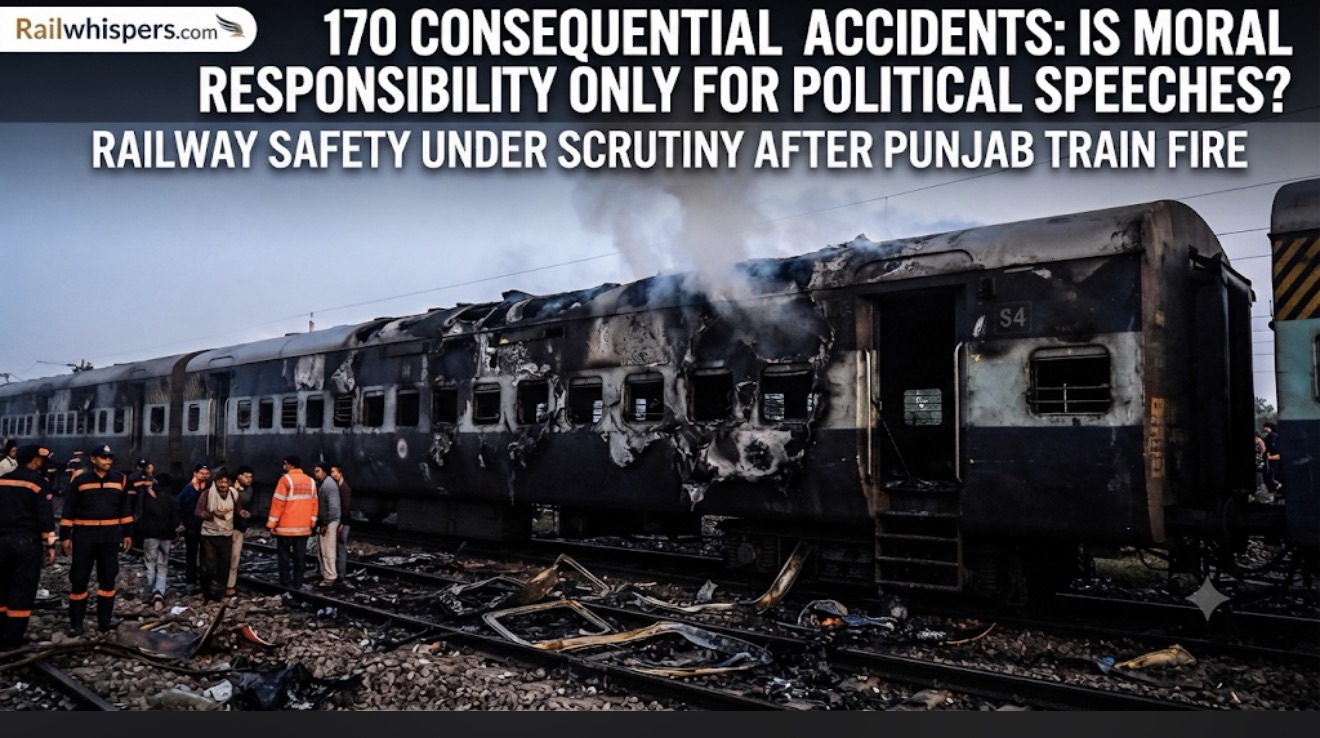
NEW DELHI: The fire incident involving the Amritsar–New Jalpaiguri Karmabhoomi Express near Rajpura, Punjab, on November 6, 2026, has once again brought railway safety and ministerial accountability into the spotlight.
According to the information shared by Grok citing official reports, a fire broke out in four coaches of the train. A short circuit or a fire in passenger belongings has been suggested as a possible cause, while the final cause remains subject to investigation. No casualties or injuries were reported in the initial information.
The incident raises an uncomfortable but important question: When will accountability for railway safety be fixed at the highest level?
170 consequential accidents: Questions over safety record
Official railway safety figures cited for five financial years show the following consequential train accidents:
- 2021–22: 35
- 2022–23: 48
- 2023–24: 40
- 2024–25: 31
- 2025–26: 16
The cumulative figure is 170 consequential accidents. However, this period began before Ashwini Vaishnaw took charge as Railway Minister on 7 July 2021, and therefore cannot be treated as an exact count of accidents during his entire ministerial tenure.
These figures nevertheless warrant a serious examination of railway safety, preventive maintenance, fire detection systems, electrical inspections and the implementation of safety recommendations.
Is moral responsibility only for political speeches?
Railway passengers do not travel on statistics or publicity campaigns. They depend on the government’s ability to provide safe and reliable transportation.
Whenever a major accident occurs, investigations are announced and committees are constituted. But the public deserves to know what action follows, who is held accountable and whether systemic failures are corrected.
The question is not merely who caused the latest fire. The larger question is whether the Railway Ministry is accepting responsibility for the overall safety of millions of passengers.
The Railway Minister must answer
- How many consequential train accidents have occurred since 7 July 2021?
- How many passengers have died or suffered serious injuries?
- How many train fires have occurred, and what were their causes?
- How many safety inquiry recommendations remain unimplemented?
- What action has been taken against officials responsible for established negligence?
The demand for accountability
The Railway Minister holds one of the most important public offices in the country. Passenger safety is not an optional achievement; it is a fundamental responsibility.
If the Railway Minister is not prepared to accept moral responsibility for repeated failures in railway safety, then the question of resignation is entirely legitimate.
At least now, the Railway Minister must act!
A fire in a running passenger train is not an ordinary incident. It raises serious questions about railway safety, maintenance, inspections and accountability.
Indian Railways cannot run merely on slogans, publicity and grand announcements. Passengers’ lives must come first.
Who will take responsibility? How many more incidents before accountability is fixed?
If the Railway Minister cannot ensure passenger safety, he must step down.
Railways need accountability, not just announcements. Passengers need safety, not assurances.
Is there no moral responsibility?