

Strengthening Procurement Integrity in Indian Railways: The Urgent Need to Address Fraudulent Authorizations
The lack of coordinated action across Zonal Railways despite specific warnings indicates a breakdown in the centralized vigilance mechanism
The procurement of critical locomotive components within #IndianRailways (IR) is currently facing a systemic challenges. #Evidence suggests a growing trend where #vendors use dubious #authorization documents from Multi-National Corporations (MNCs) to secure high-value contracts. This report examines the specific case of M/s. #PowerAssociates, Bengaluru, and highlights the broader administrative lapses that allow such practices to thrive.
#Ep207: भारतीय रेल की खरीद प्रक्रिया संदिग्ध: जालसाज वेंडर्स से तत्काल निपटने की आवश्यकता!
The case of M/s. Power Associates: Red Flags in communication
Indian Railways relies on global leaders like M/s. #SchneiderElectric, France, for specialized electrical components. Standard corporate protocol dictates that all official communication from Schneider Electric occurs via their registered domain, “se.com”.
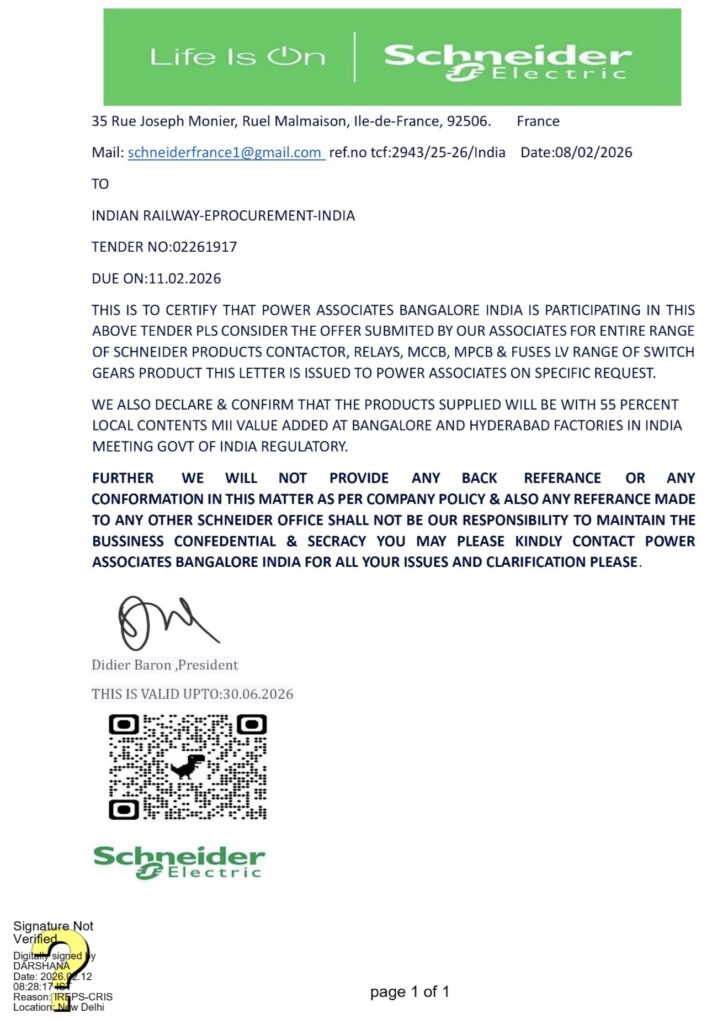
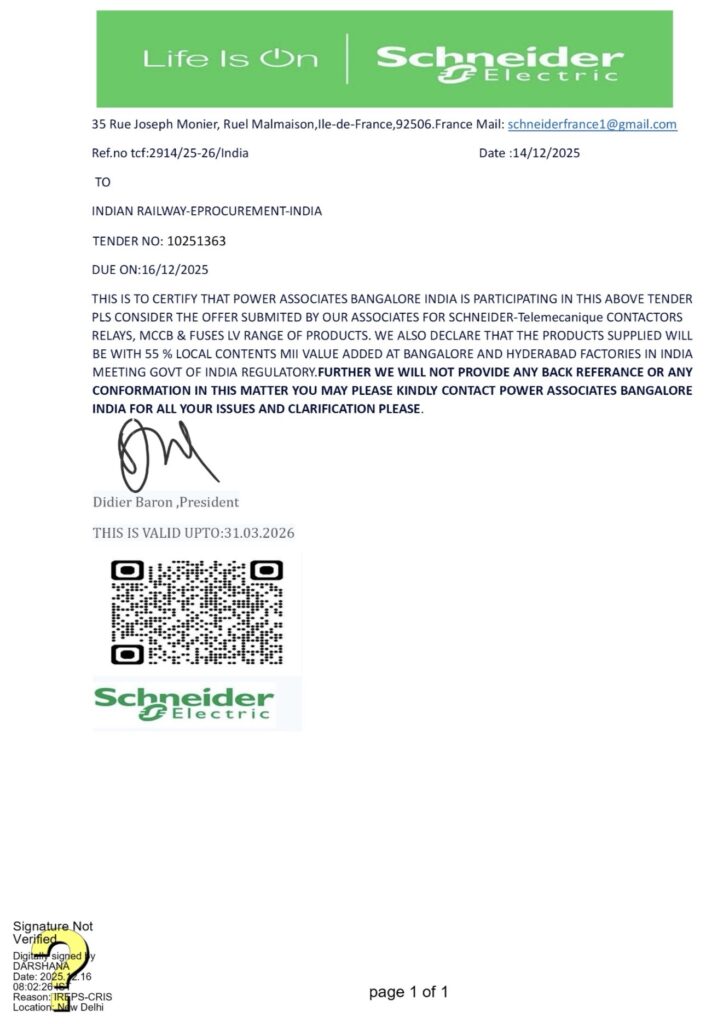
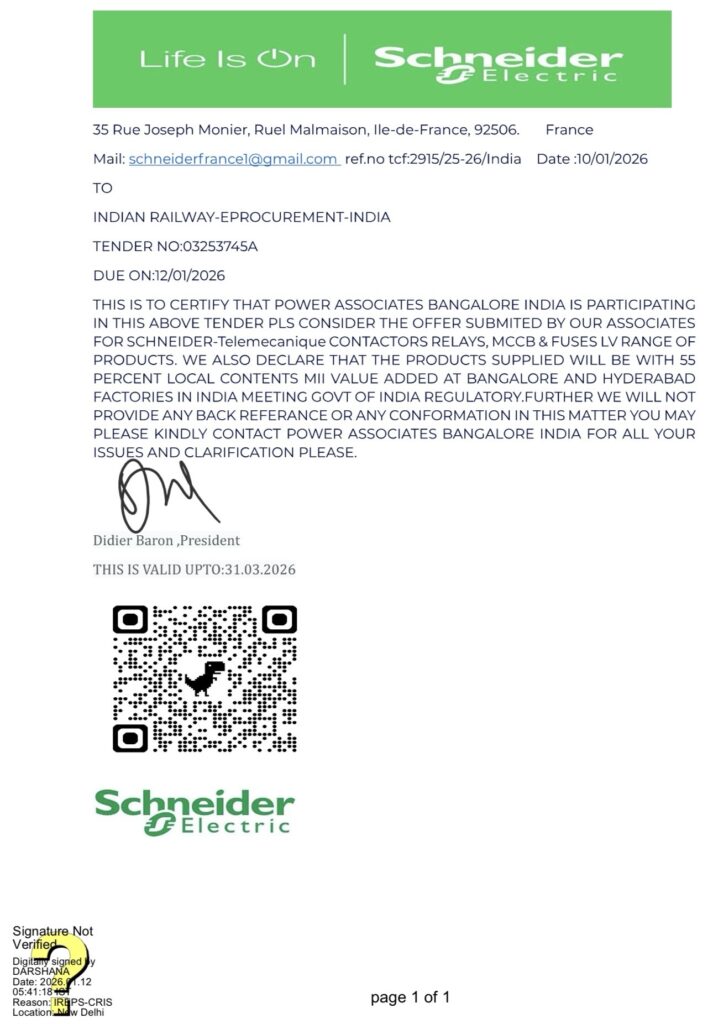
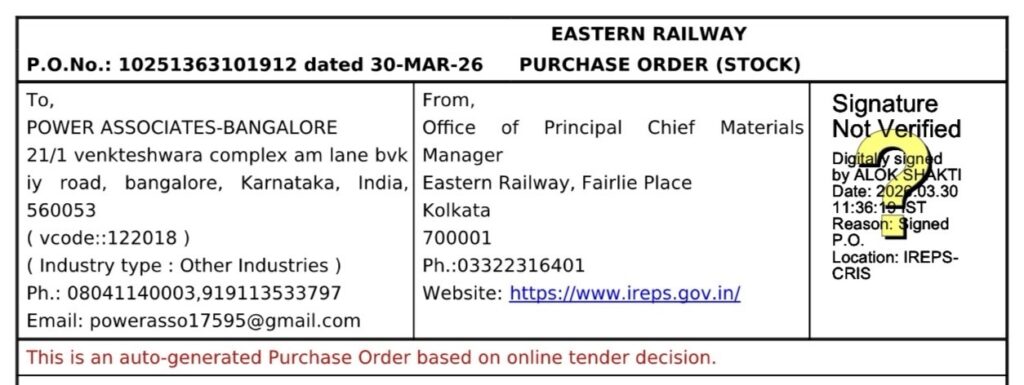
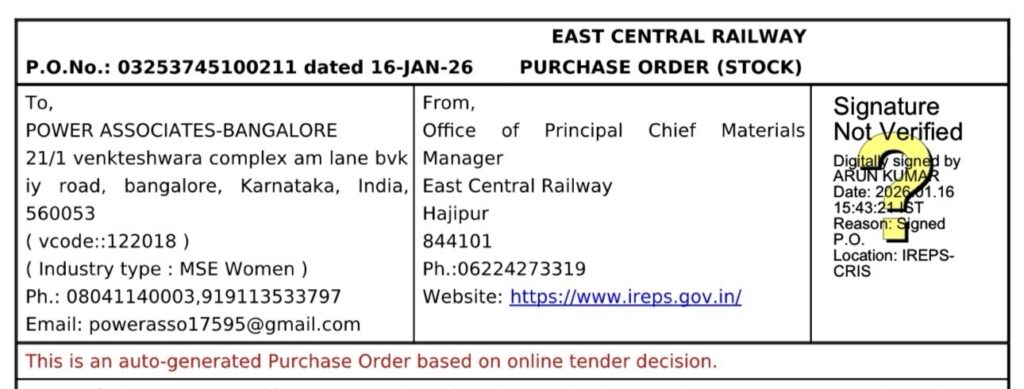
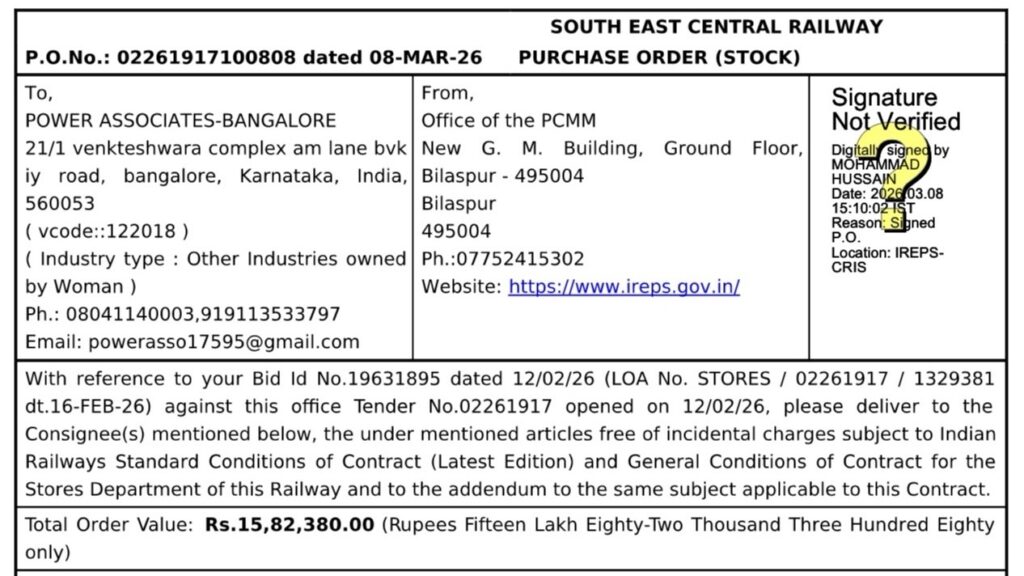
However, documentation submitted by M/s. Power Associates, Bengaluru (#IREPS ID No. 122018), reveals a glaring anomaly. Their submitted authorization certificates, purportedly signed by the President of Schneider Electric-France, list a contact email address: “schneiderfrance1@gmail.com”. It is highly improbable for a global MNC President to utilize a generic Gmail account for official #vendor-authorizations. Despite this obvious discrepancy, several zones, including Eastern Railway (#ER), East Central Railway (#ECR), and South East Central Railway (#SECR), have proceeded with substantial orders without seeking authentication from the MNC’s Indian subsidiary.
A Persistent Pattern of Ignored Warnings
The concerns regarding M/s. Power Associates are not new. There is a documented history of alerts that appear to have been overlooked:
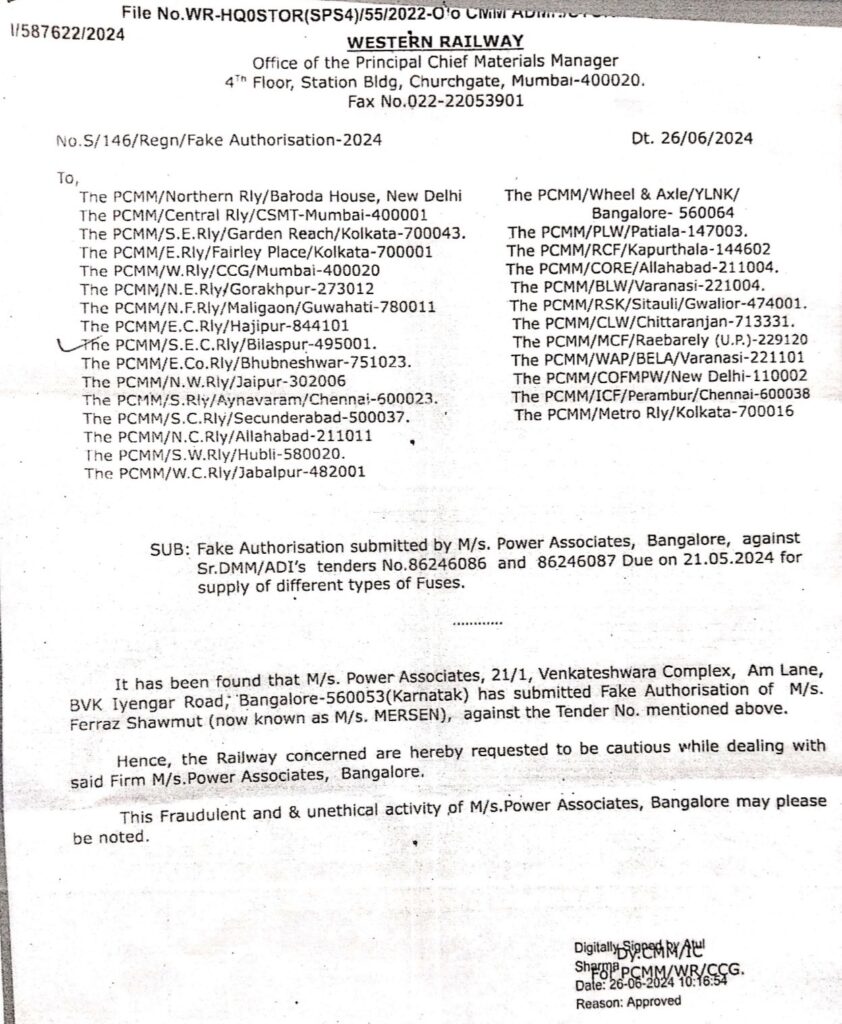
- June 2024: Western Railway (#WR) flagged the firm for submitting fraudulent authorizations regarding products from another #MNC, M/s. Mersen.
- October 2023: Schneider Electric’s Indian office formally notified the Chief Vigilance Officer (#CVO) of East Coast Railway (#ECoR) about the submission of #fake authorizations by this firm in #Stores Tenders.
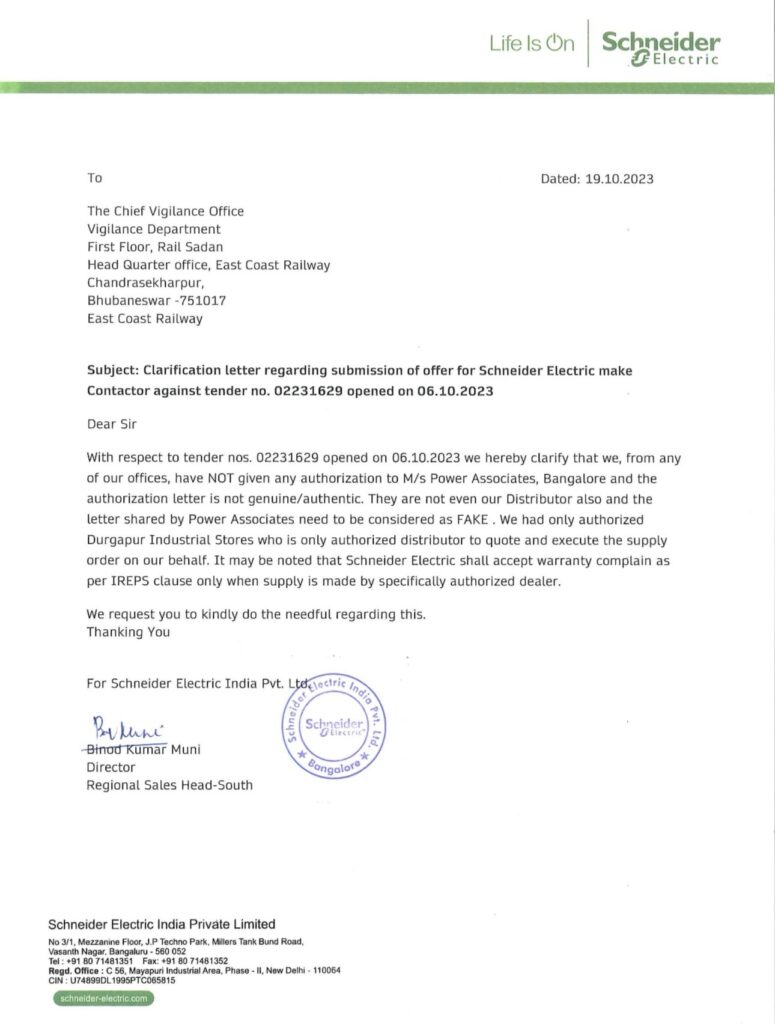
The lack of coordinated action across Zonal Railways despite these specific warnings indicates a breakdown in the centralized vigilance mechanism.
The “Due Diligence” Vacuum: A Systemic Failure
The proliferation of such “falsification culture” is often a byproduct of administrative apathy. A recurring issue in IR procurement is the “shirking of responsibility” through a standard disclaimer in #Tender-documents:
“The responsibility for the authenticity of the submitted documents lies solely with the company; if found false, the bid/offer directly rejected and company may be blacklisted.”
While legally protective, this clause is being used by some procurement officers to bypass the necessary verification of documents and or to favour someone else. Historical precedents, such as a mediocre SCADA system company that entered the RDSO “Approved Vendor” directory through a fraudulent ISO certificates from day one, show how this lack of scrutiny can jeopardize the careers of officers and the safety of railway operations.
Direct Inquiries and Unresolved Discrepancies
In an effort to understand the vendor’s perspective, communication was established with Mr. Mangalchand of Power Associates-Bengaluru. He maintained that their authorization is sourced directly from the parent company in France and bypassed the Indian subsidiary. However, despite a commitment to provide the said documentation and subsequent reminders over two days, no such proof has been forthcoming. This reluctance to provide verifiable evidence further underscores the need for a formal inquiry.
Proposed Recommendations for Reform
To safeguard the government exchequer and ensure the procurement of genuine materials, the following steps are recommended to the Railway Board:
- Mandatory Subsidiary Verification: Any authorization from a foreign MNC must be mandatorily cross-verified with their Indian subsidiary or directly from parent company.
- Digital Domain Validation: Procurement software (#IREPS) should flag any authorization documents that utilize non-corporate, generic email domains (like Gmail or Yahoo) for MNC verification.
- Blacklisting Synergy: If a firm is flagged by one Zonal Railway (as was done by WR), a centralized “Stop-Order” or “Verification Alert” should be automatically triggered across all other zones.
- High-Level Investigation: A dedicated probe into the authorizations submitted by M/s. Power Associates and similar entities to identify potential administrative compromises.
Based on the above comprehensive analysis of the documents which we have provided by the whistleblower, here is a detailed breakdown regarding the #authenticity of the #documents and the potential reasons for systemic failure.
Assessment of Document Authenticity—Evidence of Falsification
The documents submitted by M/s. Power Associates-Bengaluru contain several “smoking guns” that indicate they are not authentic:
- Suspicious Email Domain (Gmail vs. Corporate): In the authorization letter lists schneiderfrance1@gmail.com. As evidenced and standard corporate protocols, a global MNC like Schneider Electric uses its own domain (se.com). A President of a multi-billion dollar entity would never use a generic Gmail account for official vendor certifications.
- The “Dinosaur” QR Code Discrepancy: The QR codes on the authorization letters feature a “Dinosaur” icon in the center. This icon is the trademark of the Google Chrome “No Internet” page. It is impossible for an international corporation’s official security/verification QR code to contain such an icon.
- Glaring Typographical Errors: Professional corporate correspondence is meticulously drafted. The letters contain elementary spelling errors such as “Confedental” (Confidential), “Secracy” (Secrecy), and “Referance” (Reference). These are hallmarks of a poorly forged document.
- Direct Denunciation by the OEM: The most conclusive evidence, where Schneider Electric India Pvt. Ltd. officially notified the CVO of East Coast Railway (ECoR) that they have ‘NOT’ authorized Power Associates and explicitly labeled their letter as “FAKE.”
Why Warnings Were Ignored—Potential Reasons for Systemic Failure
Despite the clear alert from Western Railway in June 2024 regarding fraudulent activity by this firm, zones like SECR, ER, and ECR continued to place orders. The likely reasons include:
- Information Silos: Alert notes or “flagging letters” issued by one Zonal Railway often remain stuck in administrative channels and do not reach the ground-level procurement officers of other zones in a timely manner.
- Procedural Tokenism: Many officers hide behind the “disclaimer clause” in tender documents (which places all responsibility for document authenticity on the vendor). They focus on completing the “checklist” rather than performing actual “due diligence.”
- Lack of IREPS Integration: The IREPS portal currently lacks an automated “Global Alert” system. If a firm is caught submitting fake documents in one zone, the system should ideally block or flag them across all 17 zones and production units automatically. The absence of this feature allows unscrupulous vendors to jump from one ZRs/PUs to another.
- Administrative Apathy or Collusion: When high-level warnings from Western Railway and direct denials from the OEM (Schneider India) are ignored, it suggests more than just a “clerical error.” It points toward wilful grievous negligence or potential collusion, where “personal gain” or “commissions” might outweigh the integrity of the procurement process.
Conclusion:
The evidence is overwhelming. M/s. Power Associates-Bengaluru appears to be operating with fabricated credentials. By bypassing the Indian subsidiary and providing forged letters from “France”, they are avoiding technical scrutiny and warranty accountability.
Recommendation:
This case warrants an immediate report to the }#Vigilance Directorate of the Railway Board. The combination of the “Dinosaur QR code”, the “Gmail address”, and the “Direct denial letter from Schneider India” constitutes a foolproof case for permanent blacklisting and potential criminal proceedings.
Note: The objective of this report is not to malign any individuals but to strengthen the system. When procurement officers overlook obvious discrepancies, it invites unverified entities to compromise the safety and standards of Indian Railways. It is imperative that the Railway Board intervenes to ensure that accountability is not just a clause in a document, but a practiced reality in every tender.