

GOLD, SCOTCH, AND A RECORDING THAT CHANGED NOTHING
Gold Articles, Recorded Demands, and the Culture That Promoted Through All of It
The three earlier pieces in this series — “Railways Runs on Tracks and its Officer Corps Runs on Something Else”, “When Madam Becomes the Message”, and “Fixed Deposits, Flexible Ethics” — produced a volume and character of response that this publication did not entirely anticipate. Officers wrote in from across zones, not to dispute the account but to extend it. The machinery was familiar. What was new was the ledger being opened in print.
What follows is drawn from that ledger. No individuals are named. The incidents described are real. The sequence in which they appear is deliberate.
It is worth pausing, before the catalogue begins, to state what the Women’s Welfare Organisation (#WWO) was supposed to be — and what it has become for the officer’s household of today.
When the WWO was conceived, the circumstances it served were genuine. A transferable service posted educated women — graduates, several of them professionally qualified — to towns and cantonments with little infrastructure, fewer professional opportunities, and no social network that had not been imported from the posting before. The WWO gave those women a community and an outlet. Within those constraints, and in those postings, it served what it claimed to serve.
That demographic has changed entirely. The generation of officers now serving at junior and mid-level ranks has spouses who are doctors, engineers, lawyers, and managers — working professionals with their own careers, their own schedules, and a professional identity that has nothing to do with who their husbands report to. For these women, the WWO is not an outlet. It is a headache, tolerated for the sake of a husband whose annual appraisal passes through the hands of the same officer whose wife chairs the gathering they must attend. The WWO has not updated its purpose to match the people it nominally exists for. What it has updated, with some diligence, is the scale of its ambitions.
Now, the ledger
The floor of what this culture has normalised involves gifts. Specifically — gold articles — on birthdays, on anniversaries, on the calendar occasions that the senior household has learned to treat as entitled receivables. For those with a preference for other comforts, bottles of wine and single malt whisky at price points that no Group ‘A’ government salary can honestly explain. Officers who wrote to this publication described these not as exceptional incidents but as standard calendar management — known quantities, budgeted for in advance, expected without statement.
The gold does not travel as corruption in any formal sense. It travels as affection. As culture. As how things are done. Its function as subscription payment in a social contract that nobody signed is understood without articulation by every person in the colony. This is the entry point. What follows it is a different order of conduct entirely.
A DRM from West Central Railways was recorded on camera. The recording circulated. In it, the officer is heard directing his subordinates to contribute financially for a private function of his General Manager. Not a public event. Not a departmental occasion. A private function. And the demand was made not as informal suggestion between colleagues of equivalent standing but as a directive from a senior to those whose careers he directly controlled.
Let the significance of this register before moving past it. This is not an allegation. It is not a reconstruction from multiple accounts with room for interpretation. It is a documented record, captured and circulated, in which a serving railway officer uses his institutional position to extract from his subordinates a financial contribution to his superior’s private entertainment. The Conduct Rules prohibit this. The Prevention of Corruption Act is not silent on the question. The camera saw it.
The question of interest is not what the camera saw. The question is what the camera changed.
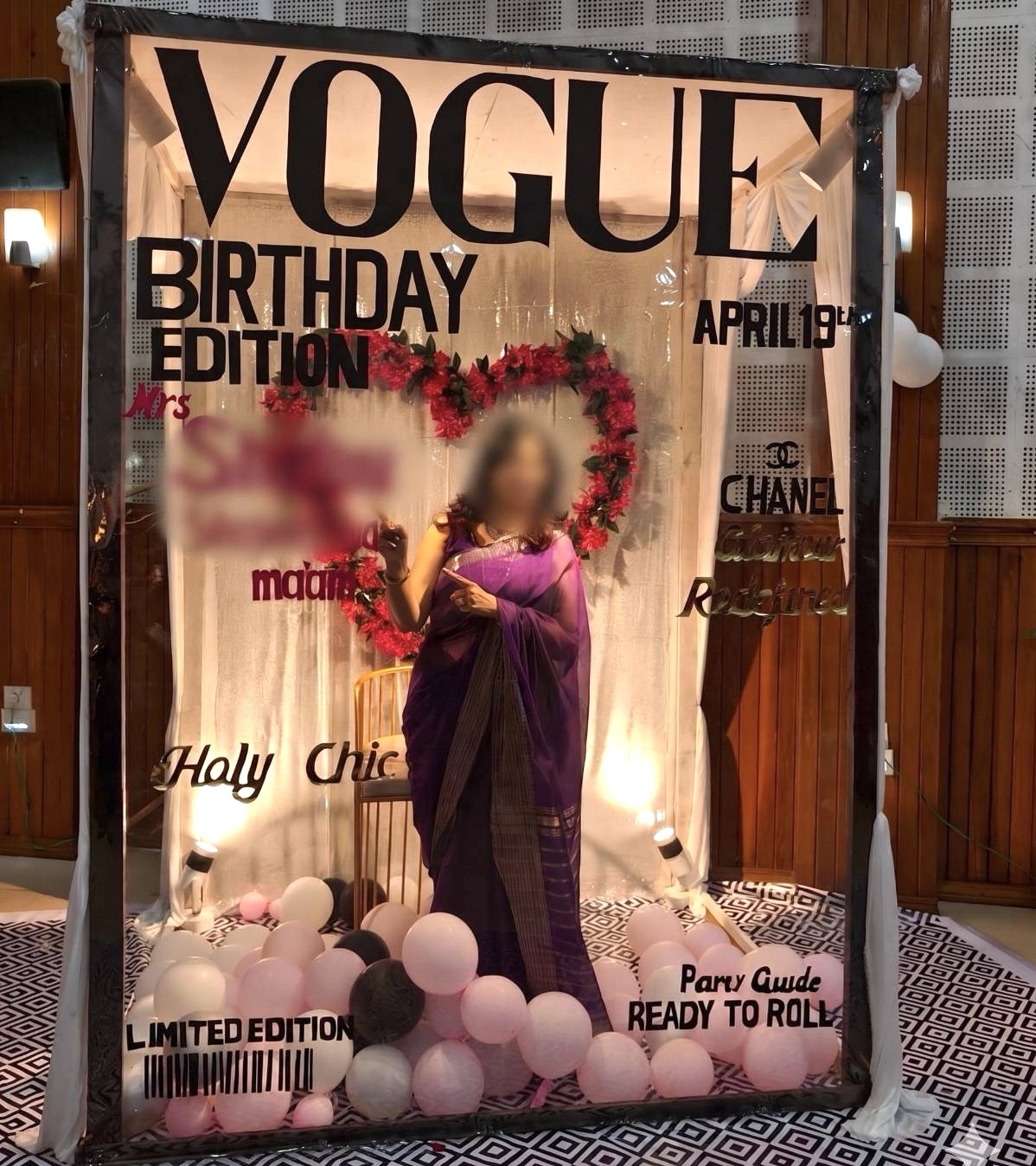
Meanwhile, at a zonal headquarters, a different register of excess was operating — quieter in form but no less deliberate in character. A General Manager’s wife acquired a reputation that required no exaggeration to describe. Parties organised at a scale that the position enabled and no salary justified. Photoshoots of a kind that belong on celebrity management calendars, not in railway colonies. An expectation of reception at gatherings, club functions, and the ordinary occasions of zonal social life that was precisely proportionate to the rank of the husband and entirely disproportionate to any other measure. Those who attended knew what attendance meant. Those who organised, gifted, and applauded did so with the full understanding that the transaction was not admiration but subscription. The position created the social gravity. The household filled it.
Elsewhere, the social geography of a club evening produced a moment that officers present have not forgotten. A GM’s wife, at a gathering, had consumed enough to remove the usual filters. The names of DRMs — subordinates of her husband, senior officers in their own right — were invoked in a register more appropriate to a landlord addressing disappointing tenants. Nobody in that room could respond in proportion. Institutional weight ran in one direction, and everyone present understood this without needing to consult a service document.
The spouse of one DRM, by the time the pattern had become established and the behaviour had exceeded what she considered worth absorbing, declined to receive this lady when a visit was anticipated. This was not theatre. It was a quiet act of refusal — a line drawn by a person who had concluded that the cost of maintaining it was preferable to the cost of not doing so. That kind of refusal, in a colony structure where every relationship is freighted with institutional consequence, requires a particular clarity about what one is willing to tolerate. It deserves to be on the record.
The final entry in this ledger involves weddings — the weddings of children of senior officers. A pattern reported from multiple zones describes the same geometry each time. Fleets of vehicles. Catering and accommodation arranged at a scale bearing no relationship to any salary the hosting officer draws. Contractors, vendors, and junior officers folded into the logistics with the expectation of contribution in kind or in coordination. Nobody who participated described it as voluntary. Nobody declined. The invitation to assist in the organisation of a senior’s family wedding — in a service where that senior writes your transfer orders, initiates your annual appraisal, and controls your access to preferred postings — is not an invitation in any ordinary sense of the word. It is a conscription dressed in the social vocabulary of goodwill.
The law of contract holds that consent given under duress is not valid consent. The Railway Services Conduct Rules do not use that vocabulary. But the situation they fail to address is precisely that one.
Three articles, a specific set of recommended actions, an expanding evidentiary record, and now this: “a documented recording circulated across the service, capturing in real time exactly the mechanism these pieces have been describing — the senior’s private occasion, the subordinate’s compelled contribution, the institutional relationship running underneath the social surface of it all.”
If that recording has produced no consequence, the institution has answered — not ambiguously, and not incompletely — the question that these pages have been asking.
The camera changed nothing. That was the institution’s choice, not the camera’s limitation.
This publication continues to receive accounts from serving and recently retired officers across all zones. Source protection is maintained without exception.