

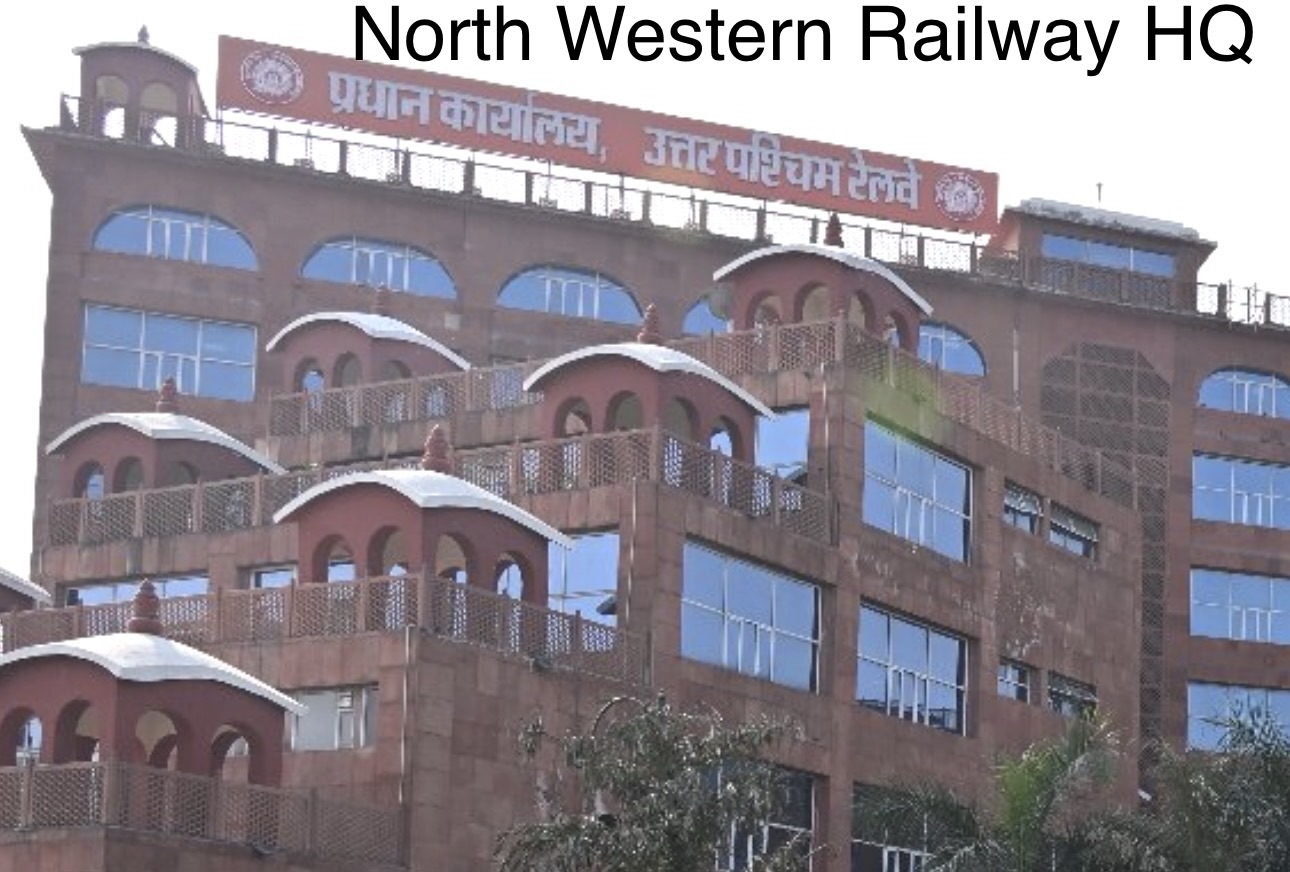
Stagnation in the Spoil-Banks: The Invisible ‘Fixed Assets’ of NWR’s Construction Wing
When the same set of eyes monitors the same projects for 5–7 years, the risk of institutional “blind spots” increases!
If the Construction Organisation functions with a fixed set of officers, it effectively blocks talent from other Zones or Headquarters from gaining exposure to vital infrastructure projects. This creates a “closed-loop” system that is antithetical to the meritocratic spirit of the Indian Railway Service of Engineers!
The administrative machinery of the #IndianRailways is built on the bedrock of rotation. The Department of Personnel and Training (#DoPT) and the #RailwayBoard have long maintained that periodic transfers between Construction, Open Line (Divisions), and Headquarters are essential to prevent the formation of “vested interests” and to ensure officers gain a 360-degree perspective of rail operations.
However, a deep dive into the #Construction Organisation of North Western Railway (#NWR) reveals a striking departure from these principles. The latest Construction Department Telephone Directory (as of January 2026) suggests that the wing is no longer a #temporary project assignment, but has become a #permanent home for several high-ranking officers.
The “Five-Year Club”: Tenure Analysis
The general administrative principle encourages #Rotation every 3 to 4 years. In NWR Construction, however, a “Five-Year Club” has emerged, where Chief Engineers have remained in the same ecosystem for half a decade or more.
Here is the officer #tenure data optimized for a mobile or compact screen, focusing on the most critical details for quick reading.
NWR Construction: Key Officer Tenures (As of Jan 2026)
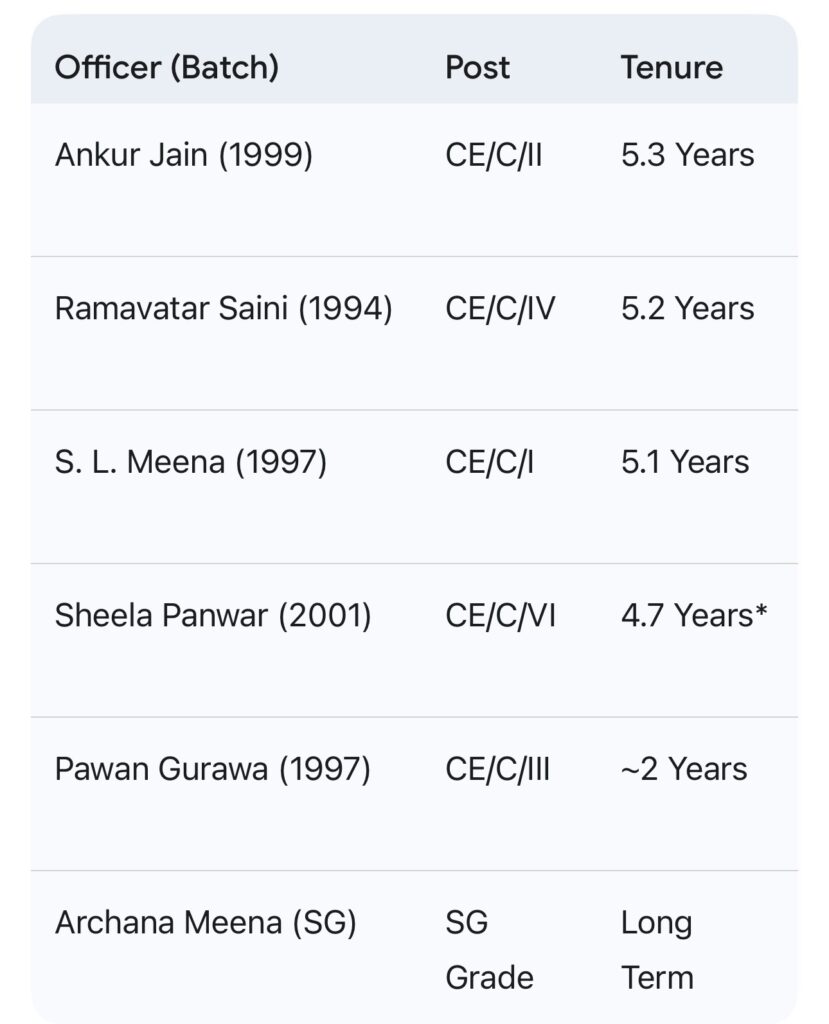
Additional Career Context (Previous NWR Roles):
- Ankur Jain: Previously Sr. DEN/Co, Ajmer.
- S. L. Meena & Pawan Gurawa: Both served as Sr. DEN/Co, Jodhpur.
- Sheela Panwar: Continuous Construction tenure (including Dy CE/C/III).
Key Takeaway: Approximately 60% of the current Chief Engineers (Construction) in NWR have now exceeded the standard 3-to-4-year administrative rotation window.
Note: Most of these officials have been within the NWR zone for over 15 years, moving only between different desks within the same geographical or organizational silos.
NWR Construction Organisation: Tenure Analysis
Key Observations for Administrative Review
Below is the consolidated data regarding the tenures of senior officers within the NWR Construction wing, formatted for clarity and quick reference.
- Rotation Stagnation: Three out of the five featured Chief Engineers have surpassed the typical 3-to-4-year rotation cycle, specifically crossing the 5-year mark in their current assignments.
- Zone Retention: Most of these officers have remained within the North Western Railway ecosystem for over 15 years, indicating a lack of inter-zonal exposure at senior levels.
- Project Continuity vs. Policy: While officers like Sheela Panwar are tied to major projects (Jaipur Junction redevelopment), the prolonged stay of nearly 60% of the Construction CEs raises questions about the implementation of DoPT rotation norms.
- Upcoming DRM Panels: With S. L. Meena and Pawan Gurawa (1997 batch) appearing in upcoming DRM panels, their lack of recent “Open Line” or “Headquarters” experience may be an area of scrutiny for administrative balance.
The DRM Paradox: Leadership Without Diversification
Perhaps the most concerning aspect of this stagnation is the career trajectory of these officers. Several—including S. L. Meena and Pawan Gurawa (CE/C/III)—are currently in the zone of consideration for Divisional Railway Manager (#DRM) empanelment.
A DRM is the administrative head of a Division, responsible for operations, safety, and commercial interests. If an officer spends the better part of over a decade exclusively in the Construction wing:
- How do they maintain touch with “Open Line” operational challenges?
- Is it equitable to appoint a DRM who has not served in a Headquarters or operational role for 15+ years?
- Does this “Construction-heavy” resume create a competency gap when managing the complexities of daily passenger and freight traffic?
The Resistance to Rotation: A Systemic Inertia?
The issue isn’t limited to the top brass. Selection Grade (SG) officials, such as Smt. Archana Meena, have reportedly served in the Construction wing for extended periods. This raises a fundamental question: Why is there such localized resistance to rotation?
Construction projects, particularly high-value ones like the Jaipur Junction redevelopment or the various “Volume-1” works, involve massive procurement and #Tender management. When the same set of eyes monitors the same projects for 5–7 years, the risk of institutional “blind spots” increases.
“Administrative Transparency Check: If the Construction Organisation functions with a fixed set of officers, it effectively blocks talent from other Zones or Headquarters from gaining exposure to vital infrastructure projects. This creates a “closed-loop” system that is antithetical to the meritocratic spirit of the Indian Railway Service of Engineers (IRSE).”
Conclusion: A Call for Equilibrium
The Indian Railways is at a most critical juncture of infrastructure expansion. However, the “Construction Cabinet” of Zonal Railways currently in place suggests that rotation is being treated as an optional suggestion rather than a mandatory guideline.
For the sake of equitable exposure and administrative balance, the Railway Board and the Member (Infra) must examine why NWR has become a stagnant pool for senior engineering talent. A vibrant railway requires officers who are as comfortable in the high-pressure environment of the Open Line as they are in the project-heavy halls of Construction.
#GMNWR #CAOCNWR #PCENWR #MemberInfra #CONSTRUCTION #ROTATION