

Fixed Deposits, Flexible Ethics
The WWO’s Treasury, the Senior’s Calendar, and the Charter Nobody Wrote..
Railwhispers.com published: “Railways Runs on Tracks and its Officer Corps Runs on Something Else” and as its followup: “WHEN MADAM BECOMES THE MESSAGE” highlighting the corrosive role Women’s Welfare Organisation (#WWO) plays in professional working of Indian Railways.
These articles received overwhelming endorsement from serving and retired officers alike and we are making the next article as a followup based on the feedback of received.
Two articles. A diagnosis. Evidence. Between them, they produced correspondence from serving and recently retired officers across multiple zones — not as complaints but as confirmation. The machinery described was not new to those who wrote in. What was new was that it had been named in print, and the naming had found an audience.
Recognition without consequence is precisely the condition in which institutional problems become permanent. The system described in these pages is not young. Officers currently at General Manager level watched it operate when they were Branch Officers. The question before them now is, what they do with that memory?
The Women’s Welfare Organisation sits at the centre of this machinery, and the first thing that needs to be said plainly is that it has outlived its purpose. When it was founded, a support network for families of a transferable service — isolated in smaller towns, far from infrastructure — had genuine utility. WWOs have since repositioned themselves as community welfare bodies. That argument does not hold either: “every district and sub-district today has a functioning state and central government social welfare net that dwarfs anything the WWO can provide. The conditions that gave the WWO its justification have changed. The WWO has not.”
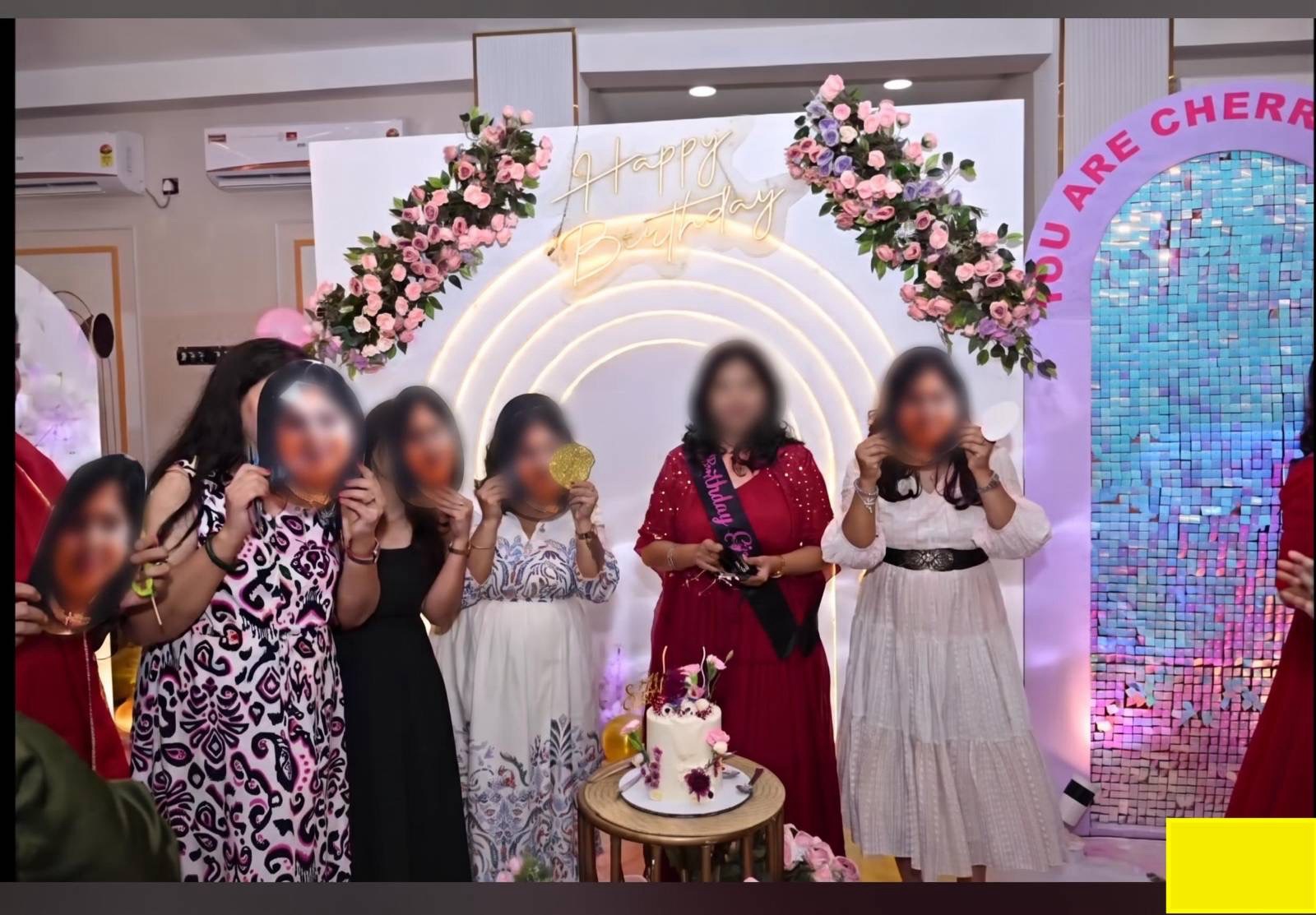
What it has become is easier described. Officers’ clubs and WWO funds — which include substantial Fixed Deposits earning interest running into lakhs every year — are being used to part-fund the personal celebrations of the same senior officers and their families who nominally govern these bodies. Birthdays. Anniversaries. The marriages of senior officers’ children, where gifts of considerable value transact in the hushed commentary that indicates everyone present understands exactly what is happening. Measured against any ethical standard applicable to organisations of this kind, the conclusion is unambiguous: this is institutional money financing private social prestige, and the culture of connivance that sustains it has no legitimate defence.
The comparison with the armed forces is instructive. In the military, the high incidence of war widows creates a genuine need for spouse networks — families under trauma need to be connected to the institutional chain of command, and that relationship is maintained with care. Indian Railways, by contrast, operates on a rigorous principle: “one death, one appointment. The human welfare case for a parallel family organisation does not exist in the same form. What exists instead is a body with large funds, a hierarchical structure mirroring the service hierarchy, and no honest account of who it actually serves.”
The answer, as officers across zones have confirmed in messages, is that it serves the households at the top. The officer who does not participate — whose wife does not attend, who is professionally competent but socially reticent — gets labelled unsocial. That label travels. It arrives before he does at his next posting. Officers who perform but do not participate learn that performance alone is insufficient. Officers who participate adequately learn that it is sufficient. The institution’s signal, delivered through a thousand social occasions, is that access matters more than output.
Three actions are now required. Each is available to people who already hold the authority to take them.
The Railway Board must amend the Railway Services (Conduct) Rules, 1966. The principle is not novel — officers are already required to report significant family financial transactions to the government. Extending that logic to social obligation in hierarchical settings is overdue, not unprecedented. The amendment should establish, clearly, that a serving officer’s conduct obligations extend to his household’s dealings with those in institutional subordination to him. No legislative intervention is required. A Board directive is sufficient. Self-gifting from club and WWO resources must be explicitly prohibited. The funds were not collected to decorate the social calendars of those who govern them.
New General Managers, DRMs, and Members of the Railway Board must #rotate their immediate staff — secretaries, #OSDs, personal assistants — without delay. This is not procedural housekeeping. Officers who arrive in proximity to an incoming senior carrying established loyalties and habits of managing upward are the mechanism by which the old arrangements survive the change of face at the top. The new senior who defers this rotation has already conceded the window in which it matters.
The WWO requires a formal charter review: “defined beneficiary, defined scope, explicit prohibition on any participation that creates social obligation within a command relationship. If the organisation cannot survive that restriction, the restriction has already answered the question of what the organisation actually is.”
The photographs have been published. The mechanism has been named. The Fixed Deposits, the Vogue frames, the gift calculus and the #APAR connection — all of it is on the record.
- The institution knows, formally, that it knows.
- The record will show what it does next.