

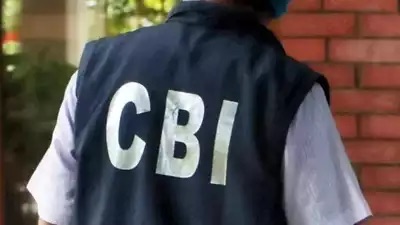
Health for Sale: CBI Uncovers ‘Bribe-for-Certificate’ Racket in Railway Medical Services
When the “healer” becomes a “dealer,” the foundation of social trust collapses
If those sworn to the Hippocratic Oath prioritize personal gain over professional integrity, it signals a terminal stage of institutional rot. It creates a “pay-to-play” system where the truth is sold to the highest bidder
The Central Bureau of Investigation (#CBI), Anti-Corruption Branch, Visakhapatnam, has registered a First Information Report (FIR No: RC0362026A0006) dated April 27, 2026, exposing a deep-seated #Corruption ring within the South Central Railway’s medical department.
The case involves the fraudulent issuance of medical certificates and favourable re-screening reports in exchange for illegal gratifications.
The Mechanics of the Scam
The investigation centers on Dr. Jyoshna Priyadarshini, the then Senior Divisional Medical Officer (#SrDMO) at the Railway Health Unit in Nandyal. According to the FIR, Dr. Priyadarshini allegedly conspired with a private individual, Shaik Rasool Karimulla, who acted as a middleman to solicit #bribes from railway employees seeking favourable medical outcomes.
The “services” offered by this syndicate included:
- Issuance of medical sickness and fitness certificates.
- Recommending “de-categorization” (changing the nature of duties) for unfit employees.
- Facilitating undeserving medical re-screening.
Digital Footprints of Corruption
The CBI has documented specific instances of money trail where digital transactions were used to facilitate these bribes:
- Case 1 (Smt. Lakkakula Venkata Siva Jyothi): A former Loco Pilot seeking sick leave regularization and medical re-screening allegedly agreed to pay ₹75,000. Between June 18 and 19, 2025, she transferred ₹70,000 in installments to the middleman, Karimulla.
- Case 2 (Shri Gadidapati Ramesh Babu): A Loco Pilot seeking de-categorization allegedly paid ₹10,000 via UPI to Karimulla to arrange a favorable Video EEG report at Central Hospital, Lallaguda.
- The “Driver” Conduit: To distance herself from the transactions, Dr. Priyadarshini reportedly instructed Karimulla to transfer her share of the bribes to her driver, Shaik Mahboob Basha.
Legal Implications
The accused face charges under Section 61(2) of the Bharatiya Nyaya Sanhita (BNS), 2023 (Criminal Conspiracy) and Sections 7, 7A, and 8 of the Prevention of Corruption Act, 1988 (as amended in 2018), which deal with public servants being bribed and obtaining undue advantages.
The Ministry of Railways has already granted the necessary approvals under Section 17A of the PC Act to proceed with the investigation against the public servants involved.
The Erosion of the Healing Touch
When the “healer” becomes a “dealer,” the foundation of social trust collapses. Medical professionals hold a unique, almost sacred position in society; they are the gatekeepers of life, health, and, in the context of the railways, public safety.
1. The Safety Risk
In this specific case, the corruption isn’t just a financial crime; it is a direct threat to the lives of thousands. When Loco Pilots—the individuals responsible for operating heavy machinery like locomotives and transporting thousands of passengers—are granted fitness or “de-categorization” based on bribes rather than biology, the potential for catastrophic railway accidents increases exponentially.
2. The Moral Decay of Society
If those sworn to the Hippocratic Oath prioritize personal gain over professional integrity, it signals a terminal stage of institutional rot. It creates a “pay-to-play” system where the truth is sold to the highest bidder. When certificates can be bought, merit and health become secondary to the size of one’s bank account.
3. The Future of Humanity
A society where medical professionals are corrupt is a society that has lost its compass. If we cannot trust the diagnosis of a doctor or the integrity of a health certificate, the very fabric of our administrative and social systems unravels. To protect the future, the response to such “medical corruption” must be swift and clinical—excising the rot before it spreads to the rest of the body politic.
The CBI’s intervention in Visakhapatnam is a necessary first step, but it serves as a grim reminder that vigilance is the only antidote to the pandemic of greed.