

The Iron Triangle: How Three Interest Groups Paralyze the Indian Railways
Without a big reset, the Indian Railways risks becoming a collection of independent fiefdoms rather than a unified national service
A quiet but profound crisis of stagnation is unfolding within the Indian Railways (IR). While the organization is celebrated for its massive infrastructure projects, its establishment structure is increasingly being held hostage by three distinct interest groups. These groups have created a self-serving ecosystem that effectively blocks meaningful rotation and administrative reform.
#Ep211: The Iron Triangle: How Three Interest Groups Paralyze The Indian Railways!
The result is a system where transparency is sacrificed for the status quo, and the constitutional mandate of fair, merit-based movement is bypassed.
1. The RBSS Fortress: A Career Within Four Walls
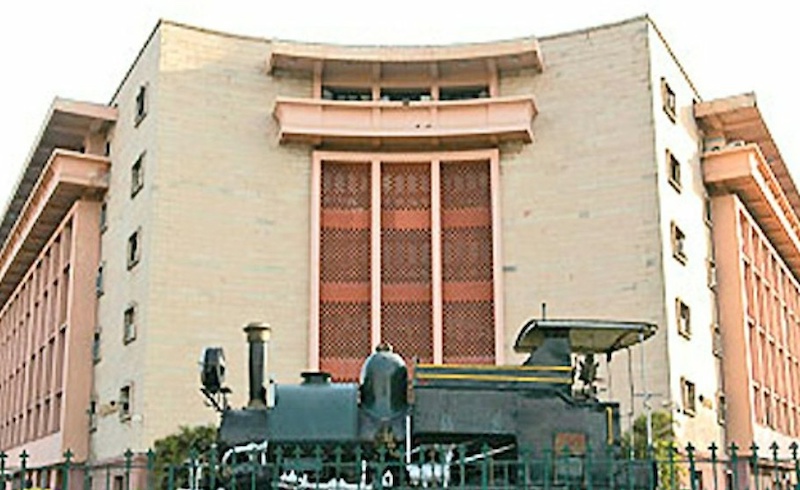
The Railway Board Secretariat Service (#RBSS) represents a unique anomaly in a transportation organization. Unlike the technical cadres that form the backbone of the IR, RBSS officers frequently spend their entire 30-to-35-year careers within a single building: #RailBhawan in New Delhi.
- The Disconnect: This “single-building” career path creates a policy-making layer that is fundamentally detached from the ground realities of the “Open Line.”
- The Consequence: Because these officials are never exposed to the operational challenges of a division or a zone, the administrative directives they draft often lack practical feasibility, prioritizing bureaucratic process over operational efficiency.
2. Group ‘B’ Officers: The Zonal Silos
Group ‘B’ officers, often promotees from the non-gazetted ranks, have historically been restricted to their home zones. However, recent developments suggest this stagnation is being institutionalized.
- The Ad-Hoc Crisis of 2026: In a significant “firefighting” move, the Railway Board issued Letter No. 2025/E(GC)16-8 on January 27, 2026, reviving ad-hoc promotions for Group ‘B’ officers to Senior Scale (Level-11) until 2028.
- Bypassing UPSC & DoPT: This move directly bypasses the Department of Personnel and Training (#DoPT) and Union Public Service Commission (#UPSC) preferences for regular recruitment and cadre management. By relying on ad-hoc promotions, the IR ensures that officers remain in their “small zones” indefinitely, avoiding the inter-zonal transfers that would bring fresh perspectives and prevent localized vested interests.
3. Trade Unions: The Shield of Immobility
The power of the Trade Unions and Federations (AIRF, NFIR) has evolved from labor welfare to a functional veto over administrative movement. Under the PREM (Participation of Railway Employees in Management) framework, unions have secured protections that make transferring a member—even a “nominal” office bearer—an administrative nightmare.
- Paralyzed Leadership: General Managers (GMs) and Divisional Railway Managers (DRMs) often find themselves powerless against union pressure.
- The Impunity Factor: This protection allows junior staff to manipulate systems at the desk or station level with complete impunity, knowing they are effectively “transfer-proof.”
Synthesis: A Compromised Establishment
The confluence of these three groups has led to an “Iron Triangle” that is entirely self-serving. The edifice of the Group ‘A’ and ‘B’ services has been compromised by the routine bypassing of standard recruitment protocols in favor of ad-hoc arrangements that favor the status quo—
The Reality Check: While the common citizen sees a modernizing railway on the outside, the internal mechanics are being browbeaten by interest groups that have achieved a level of entrenched power seen in few other Indian sectors.
The Proposal: A Structural Reset
To break this cycle, a radical “structural reset” is required. There is a growing argument for bringing in establishment experts from the Armed Forces to take over the IR’s establishment control.
- Alignment with Constitutional Mandate: The military model operates on a non-discretionary rotation system where no individual is “indispensable” to a post.
- Ending Local Hegemony: By implementing strict, tenure-based movement similar to the Army, the IR could dissolve the “zonal silos” and “building-bound” careers that currently define the service.
- Restoring Accountability: A military-style establishment control would re-empower GMs and DRMs, ensuring that transfers are based on organizational needs rather than union negotiations.
Without such a big reset, the #IndianRailways risks becoming a collection of independent fiefdoms rather than a unified national service. The time for incremental reform has passed; the “Iron Triangle” must be dismantled to ensure the Railways can truly move forward.