

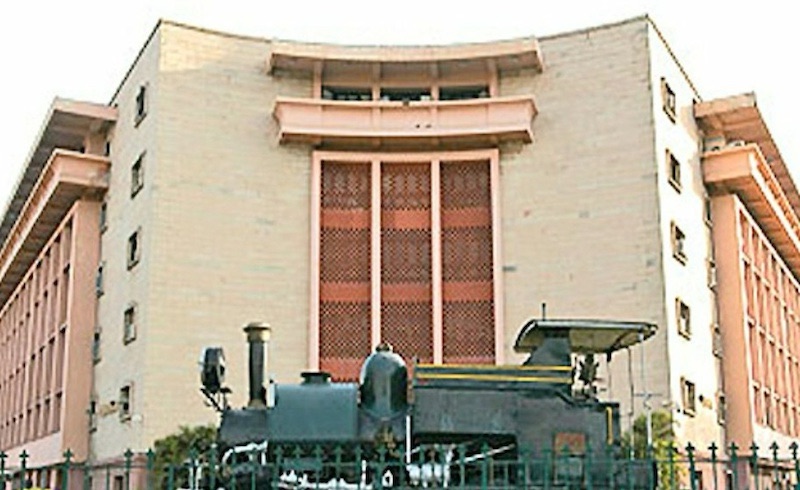
What is the role of a Division, Zone and Railway Board: Getting Basics correct, Part-II
A spectacular failure of Railway Board has been its consistent inability to tell the political masters a key problem that needed resolution!
How can anyone even have a dream of improving running of railways when the railway bureaucracy ballooned?
Was this not role of the Rail Bhawan to tell political masters that effective network management needs only few check posts?
It is role of the Railway Board to dwell on issues which blunt any well meaning government’s efforts to give a railway system that delights the country!
We discussed the role of Divisions as key O&M Unit, Zone as key coordination and planning unit in the earlier article, “What is the role of a Division, Zone and Railway Board: Getting Basics correct, Part-I”.
We also, from first principles established the root of rot that affects railway working in entirety. In another piece, “The questions which must be deliberated”, we quoted Bert Lance, “That’s the trouble with government: Fixing things that aren’t broken and not fixing things that are broken”. This captures the essence of what was the #mechanism of systemic failure that occurred in #transformation exercise—which was led by people akin to a compass with demagnetised needle.
Transformation was in the hands of self-seeking hypocrites who valued #machinations and #networking over professional excellence. They equated those who spend every hour of working life thinking and slogging on real problems of the network, fixed infra and rolling stock with 10 am-6 pm role holders. Those who championed transformation were ‘tender-masters’, who felt that role of #ministry is to just define general and special conditions of #contract—rest all would follow. There was also a streak of #neoliberalism —why to create domestic competencies when products and services are available on payment? This unfortunately became hallmark of UPA-2’s Planning Commission, which continued to guide #RailBhawan after 2014.
Further, these transformation champions were those who hardly stepped out of New Delhi, holed in cubicles of Rail Bhawan or occasionally in Baroda House, they were the classic participants in palace intrigues. And in the process they just forgot their raison d’etre—they were hired by people of the country to make and operate a railway system and serve them and the economy. Big #tenders brought more expensive lawyers and marketeers in the corridors of Rail Bhawan.
In their echo-chambers, these transformation champions imagined them to be intellectually gifted who had solutions to decade old problems of Indian Railways (#IR)—it didn’t matter whether their diagnosis was correct or not, as those who had true pulse of the problems were banished. They were, apart from the black suits, easy target for those who sold executive programs of Management Schools.
Those who know how management schools function, know that management schools world over recognises executive programs as their golden egg laying hen. Management consultants, it is well recognised now, can wreck havoc if not reined in. Every problem gets mapped to a top tier B-School case study, every problem will be explained using multiple theories (if they can be called one-in this game those who lost do not get published in glossy business magazines).
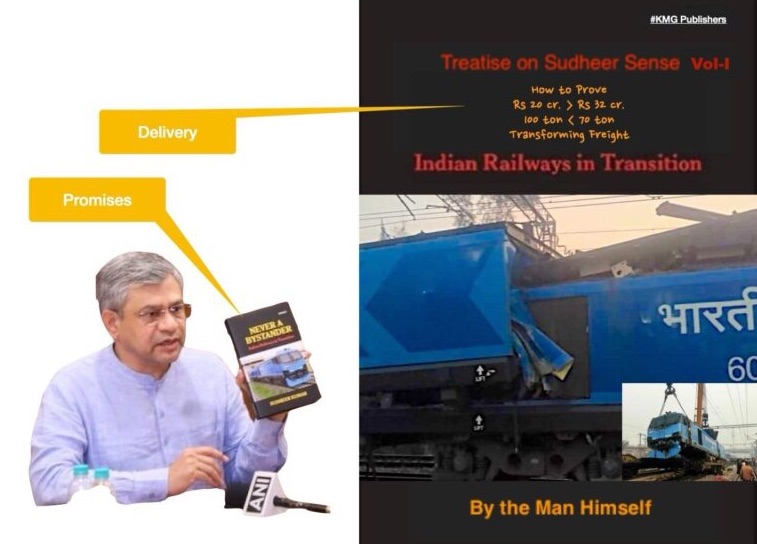
Engineers and Humanity background officers—in essence-all of them—do not have with them a background by which they can handle these ‘management gurus’. Talk to a true blue engineer of railways and he can easily handle marketeers dealing in his domain. Talk to a civil service officer and he can handle any number of unions, political programs without batting an eyelid. But before M-School consultants (B-Schools to many is a misnomer), both variety of officers are as mouldable as wet clay.
Another useful tool with M-Schools or upstart universities is to offer easy to do PhDs. Some Metro Organisations in India are reportedly tied to upstart universities.
Management Schools made an entry in big way when Lalu Prasad Yadav was the Minister for Railways and they never left. Spend on Human Resources (#HR) is very enticing. For a large organisation like IR even a small percentage of its outlay is eye watering sum for any M-School.
Inroads became pronounced after 2014 as they gamed on PM’s desire to transform from a “Mai-Baap Sarkar” to citizen-centric government. Ready with slick presentations, it was easy to promise changes and transformation through flashy railway stations and trains. Mandarins of Rail Bhawan and transformation experts created a structure which essentially became an un-supervised bottomless sinkhole to soak-in vast public expenditure.
Role of Railway Board
Railway Board is seat of power in Ministry of Railways. With power to allocate budget, with final say on disciplinary matters, final say on transfers and postings, nothing comes close to it in being epitome of raw adminsitrative power. With vast pool of luxurious offices, accommodations, vast resources at disposal, Rail Bhawan’s power of patronage is unparalleled vis a vis other ministries in Lutyens’ Delhi.
With power comes responsibility—this is the first principle of any administrative design. Here political leadership erred repeatedly in judgement. What were they seeing? How were railway structures could be seen similar to district or state level structures? A separate structure was always accepted in armed forces, foreign services and railways. Conflating railway management and administration with that of state government and other central bureaucracies led to equating apples with oranges—clearly an unsustainable system—a key reason behind embarrassing policy about-turns, more of which are in store.
Railway Board being apex body needs to look beyond an immediate failure, look in to the reasons that led to failures and accidents, work out administrative inputs which make system deliver on its core mandate—keeping wheels on rail with success. Monthly CRB’s #safety-review meeting does a poor job at it—doing someone else’s job, essentially increasing entropy of the system and causing more disorderliness. Reviewing past decisions and policies is one key role which only Railway Board can do—something which it has failed to do.
Is railway board able to take long term view? Sadly no! Look at the number of zones—sudden increase from 9 to 16 and now to 17 has delivered a body blow to railway operations and it is not even on agenda to review the decision to increase the number of zones. This is what Railway Board has to work for. Take long term view. Creation of Long Term Decision Support System or mobility or Gati Shakti directorates do not help. Board must have officers who cut through clutter and see truly long term. While Tactical planning is Zonal Railway’s preserve, it is Railway Board that must shoulder responsibility of strategic view.
Sadly, it has just pandered to populist demands like creation of more zones. They failed to explain to the politicians that creation of a Zonal HQ is not what people aspire—it is aspiration of railwaymen as it helps only railway officers and staff. By this decision, more officers could become General Managers, more could become PHODs/HODs/BOs. Ability to run more trains and at faster speed—well needle is yet to move on that.
Neti-Neti
This helps to know what it should be.
Failure to fix what needed a fix and failing to advise correctly when additional zones were sought, gives reference points for analysis. While IR battles for affecting modal shift from road to rail, extremely low average speeds despite investing more than seventeen lakh crore—by some estimates—will never give confidence to businesses.
While Railway Board sits as a lord, it lacks any moral standing which can inspire Divisional leadership which runs railways. However, to show political masters, Railway Board routinely bypasses Zonal leadership to reach out Divisions. Making young Branch officers (#BOs) stand and answer #Chairman is now common scene. That current chairman is on contractual extension does not help either, these extensions were never resisted—showing how self-centred these senior most officers have been who put self-interests over organisational interests.
As Rail Bhawan is den of #AIDS/#KMG officers, their key skill is not professional competence, but survival in Delhi. Can they give any quality analysis or advice? This is for #political-leadership to see and evaluate. Would they give Command of Armed forces to someone who has just managed to stay in Delhi, does not carry any battle scars?
A spectacular failure of railway board has been its consistent inability to tell the political masters a key problem that needed resolution. When there were no good telephones, no internet, no mobiles and whatsapp, entire stretch from Mumbai to the outskirts of New Delhi (Faridabad) or Howrah to Bhubaneswar or Howrah to Danapur or Gorakhpur to Samastipur was managed by just one General Manager, 9 PHODs with some 40 HODs. Now these stretches is managed by more General Managers, more PHODs, more HODs, and many more BOs.
Is this not against mantra of #Modi ji, of “minimum government and maximum governance?”
The bloat in railway #babudom is scary if pan-IR view is taken. Size of country remains same and we today have magnificent IT and Telecom infrastructure. In pre-IT revolution days 9 GMs, less than 90 PHODs and less than 400 HODs, and less BOs ran entire IR (open line). Now with one of the world’s finest IT infrastructure, IR is run by about 17 General Managers (depending how you count them), 150-200 PHODs, 1000 odd HODs, and thousands of BOs.
Let than sink in-how can anyone even have a dream of improving running of railways when the railway bureaucracy ballooned? Was this not role of the Rail Bhawan to tell political masters that effective network management needs fewer check posts (which this very same government did with GST). It is role of the Rail Bhawan to dwell on issues like these which blunt any well meaning government’s efforts to give a railway system that delights the country.
Railway Board’s monthly #Safety meeting in effect acknowledges the collapse of bureaucratically bloated yet jurisdictionally shrunk zonal leadership. Contd..