

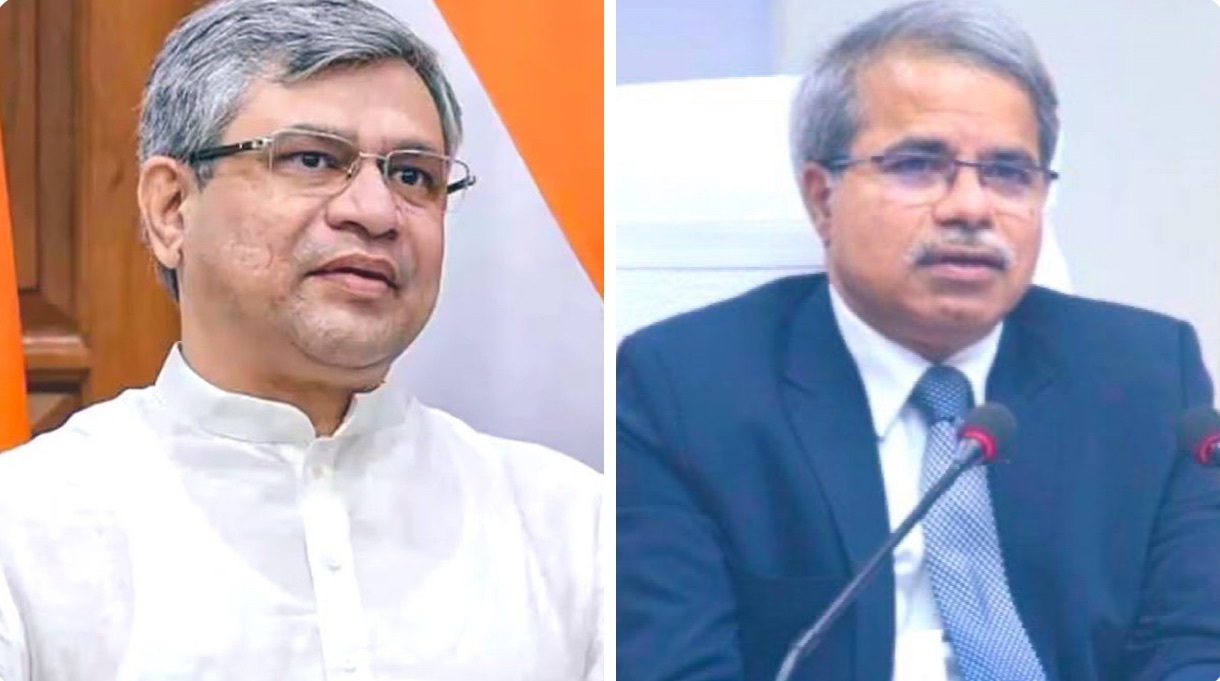
Gazette Raj Adds to Confusion—Now Courts Deciding Postings of Leadership Triad
We raised concerns about the Indian Railways’ top brass, whom #critics say take decisions in secret out of malice and lacking confidence to face hardworking field officers. Observers point to a pattern of gazette notifications that introduce rules only to rescind them, a cycle critics argue places the Ministry of Railways at the forefront of #Policy churn among ministries.
It is uncommon for officers to seek redress through the Central Administrative Tribunal (#CAT) or the Courts. Yet when they do, they have often prevailed. One such officer went on to become a member, instead of being ground down at Level-15.
Now several cases by #IRSE, #IRSSE, #IRSEE, #IRAS are either in hearing or have been disposed favourably towards the aggrieved officer.
Why do senior officers with 25–30 years of service feel aggrieved?
#Firstly, arbitrariness in the selection of senior leadership or management posts—DRMs, GMs, Members, and the CRB—remains a widely held grievance. Critics argue that the repeated extensions granted over the past 11 years have eroded the administrative spine of the Indian Railways. Those in power crowned their favourites, but that move eroded the #credibility of the government’s priceless pool of officers.
#Secondly, officers have lost faith in their seniors and doubt they will get justice. With a widening disconnect between #Members and their #cadres, credibility in the system has all but collapsed.
#Thirdly, critics say there is a troubling pattern of promoting officers with limited exposure to operating issues or safety decisions over those who have worked directly in O&M, which has undermined the morale of many hardworking officers and staff. Observers note a shift in senior appointments, with general managers drawn from the #Stores department and DRMs from #Personnel and #Accounts, rather than Operations.
In the Railway Board’s Safety meeting on December 10, the #DGSafety and the #CRB criticised the performance of #EasternRailway’s operations. How can a Chief Track Engineer (#CTE) be expected to motivate teams if basics are neglected? Some warn that neglecting fundamentals could lead to #Safety lapses, citing high-profile examples from other industries, with Indian Railways not immune.
Indigo’s and Boeing’s falls from grace offer a sobering reminder of what happens when the basics are overlooked and domain expertise is sidelined. How can officers with little to no hands-on experience in operating issues or safety be placed on the same footing as those who have toiled 24/7 to run and maintain the system? From rushing on every lurch message to the anxiety when a driver crosses a signal by a mere metre, critics say when this decades long experience is ignored, one gets mess IR finds itself in.
At the core of this mess is lack of #rotation, and the failure to punish those who steered the #Minister toward wrong decisions; the failure to punish corrupt #Vigilance officers and inspectors who ran a racket under the very nose of a government that prided itself on honesty and integrity, with assurances that honest and bold officers would be protected—which sadly turned out to be hollow. Where is the accountability? If these assurances are to mean anything, they must be turned into action: #rotate, #investigate, #punish, and #protect those who serve with courage. Let this be the moment to restore public trust and reclaim the nation’s faith in its institutions.
In closing, the material before us lays bare a pattern: lack of rotation, selective promotions, and a failure to discipline those who steer decisions—often under the nose of a government that has prided itself on honesty and integrity. Officers have pursued remedies in CAT and courts not as an aberration but as the only recourse left when due process and fair opportunity are repeatedly thwarted. An IRAS officer of the 1998 batch seeks a #DRM post through CAT, aggrieved that when the Bengaluru DRM post fell vacant in 2025, vacancy was decided on an older panel. There was an IRAS officer of 1996 batch who missed his chance as he faced strategically timed vigilance cases by the infamous vigilance racket of Indian Railways. When the racketeers of vigilance were moved out, this officer got delayed justice which affected this officer of 1997 batch. There is no penalty on officers who act as contract hit-men of careers of promising officers. This is not just administrative tardiness; it has eroded the entire integrity of the service and public safety.
Therefore, enforcing meaningful rotation to prevent stagnation and capture; institute transparent, merit-based appointment processes for DRMs, GMs, Members, and CRBs with clear timelines; establish an autonomous vigilance mechanism and hold malfeasance to account while protecting whistleblowers; and publish regular, independent audits of #cadre management decisions. Only a comprehensive program anchored in due process, #transparency, and #accountability can restore faith among officers and the public that the Railway Ministry serves with fairness, competence, and integrity.